• Home Tours
    • Dwell Exclusives
    • Before & After
    • Budget Breakdown
    • Renovations
    • Prefab
    • Video Tours
    • Travel
    • Real Estate
    • Vacation Rentals
  • Photos
    • Editor’s Picks
    • Bathrooms
    • Kitchens
    • Staircases
    • Outdoor
  • Magazine
    • Current Issue
    • All Issues
  • Shop
    • Shopping Guides
    • Furniture
    • Lighting & Fans
    • Decor & More
    • Kitchen & Dining
    • Bath & Bed
  • Projects
    • Editor’s Picks
    • Modern
    • Midcentury
    • Industrial
    • Farmhouses
    • Scandinavian
    • Find a Pro
    • Sourcebook
    • Post a Project
  • Collections
    • Editor’s Picks
    • Shopping
    • Recently Saved
    • Planning
SubscribeSign In
  • FILTER

    • All Photos
    • Editor’s Picks
    • exterior
  • Building Type

    • House(89)
    • Apartment(1)
    • Cabin(7)
    • Boathouse
    • Shed
    • Beach House(8)
    • Shipping Container(2)
    • Prefab(5)
    • Farmhouse(2)
    • Mid-Century(4)
    • Ranch
    • Barn(2)
    • Camper
    • Airstream
    • Tent
    • Treehouse(3)
    • Tiny Home(8)
    • Small Home(1)
    • ADU
  • Roof Material

    • Shingles(45)
    • Metal(50)
    • Tile(5)
    • Green(5)
  • Siding Material

    • Wood(77)
    • Concrete(8)
    • Metal(20)
    • Vinyl
    • Stucco(15)
    • Brick(9)
    • Stone(7)
    • Glass(6)
    • Green(3)
  • RoofLine

    • Flat(22)
    • Shed(2)
    • A-Frame
    • Gable(13)
    • Butterfly(1)
    • Hipped(116)
    • Gambrel
    • Mansard
    • Saltbox
    • Curved
    • Dome
    • Sawtooth
All Photos/exterior/roofline : hipped

Exterior Hipped Roofline Design Photos and Ideas

Redwood siding lends TK. "We wanted to slowly gain some presence in the community and not come in swinging,
A 2024 remodel of the home by LAMAS Architecture kept the exterior of the historic farmhouse much the same.
The modest home is clad in Weathertex panels made from 97% eucalyptus woodchips and 3% paraffin. The cladding is finished with a charcoal-colored stain to enhance street appeal and avoid any unsightly weathering.
Colleen Healey Architecture rebuilt an existing addition and reconfigured the common areas to place the kitchen and dining table right next to the meadow.
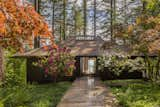
In 2020, Isabel and David Yahng bought their Portland house, which was originally designed by architect Saul Zaik in 1963.
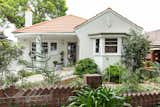
The original house was built in 1914, on a slightly raised portion of the property.
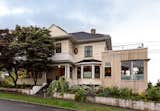
Matthew and Holly worked with Best Practice Architecture on the remodel, removing the front addition from the 1950s and reinstating the historic bay window. The remaining addition had to be rebuilt and was clad in tongue-and-groove 3-inch vertical cedar "tight knot
Previously, a screened porch at the front left had been enclosed for additional living space, but wasn’t very usable, so Jobe and Corral converted it back to its original purpose. Now, it serves as a mudroom and a transition space before entering the living room. The preserved board and batten siding is painted Benjamin Moore ‘Kendall Charcoal’ and the ceiling fans are from Schoolhouse. Board-formed concrete replaced the brick, and new steps are formed by limestone slabs taken from the tops of quarries so that the top surface is natural.
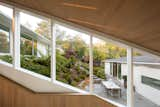
To bring sunlight into the lakeside home, Max-A set a giant skylight in one of its roof facets.
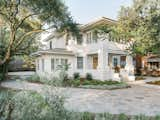
When the team presented the plans to the neighborhood historical society for approval, “everyone was thrilled,” says Martin Locraft, a member of the architecture team.
No one wanted to alter the stairway, and kept its original design intact. New windows and a clever and sleek wood staircase highlight the private courtyard outside.
After: A new porch roof, made of metal, completes the updated exterior facade. The home’s doors and the garage door are painted a punchy pink, Benjamin Moore’s Rosewood.
HR Design Department refurbished the original wood siding and painted it in Sherwin Williams Snowbound. New flagstone pavers and gravel make the yard more drought tolerant.
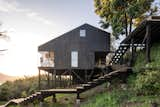
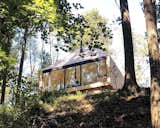
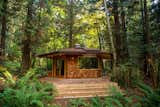
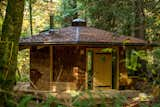
The Hut rests peacefully on a bank overlooking the lake.
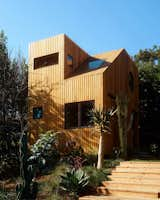
When a Los Angeles–based entrepreneur and writer were seeking creative refuge, they didn’t have to travel far for inspiration. The duo simply looked to their backyard to erect a 245-square-foot guesthouse on their hillside property in the Los Feliz neighborhood. Nestled just behind their main residence, the tranquil space, designed by Jerome Byron, serves as a work/play sanctuary for the couple and their two children.
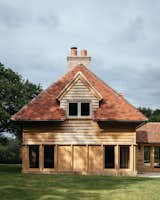
The roof profile of the addition is a direct reference to the hipped roof of the main house.
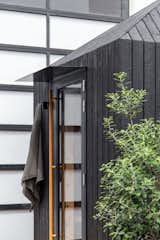
Highly textural traditional 'Yakisugi' burnt timber rainscreen. The char is 100% UV proof and repels water from the timber resulting in a very low maintenance cycle whilst providing a tactile aligator-like texture.
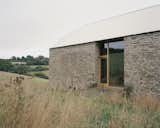
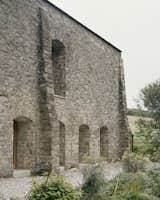
“Something really difficult to capture is the visceral quality, like the acoustics, and the experience of being in the barn with the changing weather,” says Sam.
“Our interventions were about making it extremely clear what we were putting back, and where we were adding new elements,” says Tom.
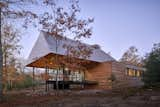
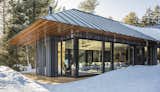
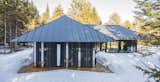
The glass pavilion rises into a peaked roof, one of the cabin's most distinguishing features.
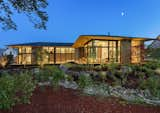
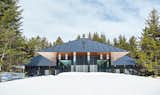
Japanese practice Kengo Kuma and Associates teamed up with Suteki America to build the Suteki House for the 2017 NW Natural Street of Dreams residential construction showcase in Oregon. The home "envisions a new mode of suburban living by combining Japanese spatial principles and a nature-based, American way of life," according to the architects.
A view of the back of the structure, highlighting both the long entry staircase and solar panels on the straw roof.
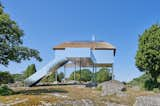
Completed in 2020, the Illusion Villa is perched in the Eriksberg Wildlife Park. It offers visitors the opportunity to go off grid and reconnect with nature.
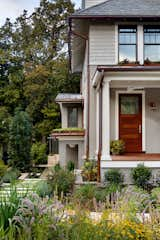
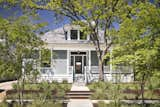
The home is connected to a series of five unique outdoor spaces, hence its name: Five Yard House. Each yard takes a different approach to the landscape. The front lawn that faces the street is very orderly and manicured, and it maintains the appearance of the traditional neighborhood. “At one point, we debated a contemporary design for the steps leading up to the front porch—just to hint at the changes happening beyond,” says architect Miguel Rivera. “In the end, however, we decided it was best to adhere strictly to the historic nature of the district.”
The home boasts numerous outdoor spaces, many protected from unpredictable rain showers.
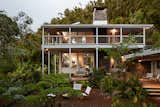
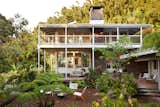
Interior designer Ginger Lunt revives a 1954 residence that she fell in love with as a young girl growing up in the tropical forests of Mount Tantalus.
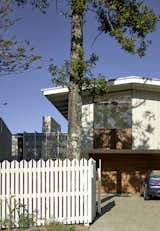
"By replacing the low-value, original garage and workshop, space was created within the original building envelope to create a three-bed, one-bath guest wing above," says DFJ Architects. This new wing is on the same level as the main residence and "is keyed into the existing roof pitch," so it fits seamlessly into the neighborhood.
The hexagonal backyard studio that Marlin and Ryan Hanson, of Hanson Land & Sea, designed and built in British Columbia, Canada, is clad with western red cedar shakes and a metal roof.
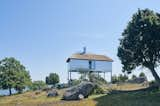
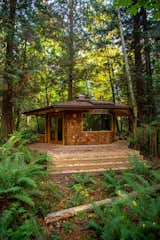
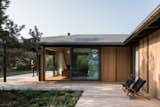
Architect Johan Sundberg looked to Japanese architects like Kengo Kuma for inspiration for the design of a holiday home in southern Sweden. "We call it the Katsura typology, but that's probably sacrilegious," he says. The eaves of the gently sloped hipped roof extend generously in all directions, turning the deck into a covered retreat that’s part veranda, part engawa, the Japanese version of a porch.
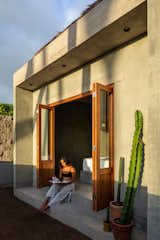
Folding doors create an indoor/outdoor experience.
The indoor/outdoor quality of the modest residence was inspired by the cinematic quality of the natural surroundings.
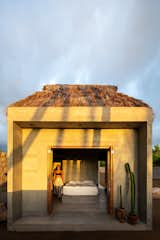
Pared back to the basics, Litibú allows the landscape to guide its narrative.
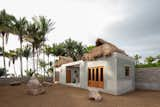
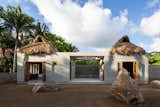
The palapa roof is a nod to traditional Mexican architecture.
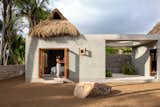
The compact retreat in Nayarit, Mexico, that Palma designed for an American couple comprises two stucco-clad volumes connected by a patio. The oculus above the open space frames the sky.
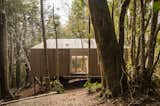
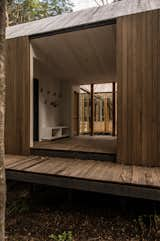
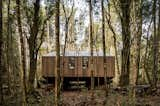
Considering the abundance of biodiversity, lifting the structure off the ground was an ecological measure as much as a utilitarian one.
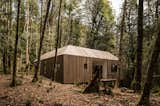
Underneath the cabin’s pine finish lies a weatherproof membrane—an essential consideration granted the region’s rainy climate.
A hardwood roof ensures that the cabin can withstand wintry snowfalls.
The Impluvium Refuge is set in a dense, tall Chilean forest within the Huilo-Huilo Biological Reserve.
Jeffrey Bokey-Grant gives his family’s traditional cottage an award-winning remodel that adheres to the original footprint. The original brick worker’s cottage is estimated to have been built in the 1920s. "The house had since been victim to neglect and a series of questionable improvements over the course of its life," says Bokey-Grant.
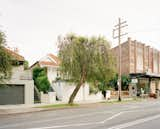
From the street, you can’t even tell there’s an extension in the back: it’s just a quaint cottage with a garden. “You get the best of both worlds,” says Szczerbicki.
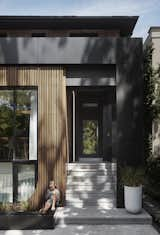
“One of the clients’ families has a history of being heavily involved in beautiful vintage wooden boats,” says architect Trevor Wallace. “The timber screen plays off that idea and introduces a very warm, natural material to face the street.” The timber screen wraps around the side window to offer added privacy from the main entrance.
The brick home had a previous addition at the front that was modified during the renovation. “The client was keen on a heavy black aesthetic and we were worried it might feel very heavy, especially as it is the community-facing element of the building,” says architect Trevor Wallace. “So, we lightened it up and made it feel a bit warmer with the timber screen.”
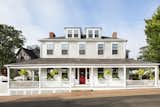
The 1830s mansion that is now Life House Nantucket was originally built by whaler Captain Robert Calder and opened as an inn in 1870.
The hexagonal backyard studio that Marlin and Ryan Hanson designed and built in British Columbia, Canada, is clad with western red cedar shakes and a metal roof.
The house has two distinct wings—the 1885 original "front" and the contemporary "rear." The front part of the home has been restored to the original 1885 floor plan, while the rear of the home was demolished and replaced with a new build that contains the garage, bathroom, and storage on the ground floor, and the boys’ bedrooms on the upper floor.
The Hansons crafted the front door from a single slab of yellow cedar. The circular window in the door mimics a ship porthole and features hand-blown colored glass.
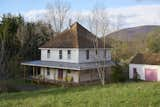
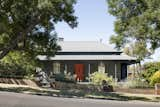
The original home was a parson’s residence built over 150 years ago that had undergone a series of small remodels in the eighties and nineties. This new intervention retained the exterior detail at the front and updated the paint scheme.
A gravel path leads from the dining area to a bridge across the restored creek that runs along one side of the house.
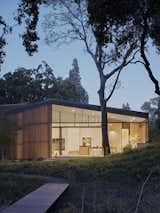
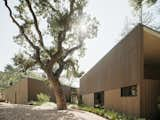
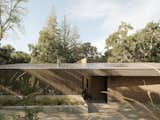
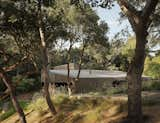
A centuries-old blue oak stands near the intersection of the two wings of the house, which is clad in Alaskan yellow cedar. “We decided to split the house into two volumes to let in light and allow us to be more nimble with where we placed the structures.” Jess Field, the architect.
Says Krista, “We needed to know that whatever we built would not take away from the landscape.”
On a lot studded with old-growth oaks and redwoods and crossed by a creek, Ian and Krista Johnson asked Field Architecture to design a house that would defer to its natural surroundings.
Lago Vista by Dick Clark + Associates
007 House by Dick Clark + Associates
12Next
About
  • About
  • Contact Us
  • FAQ
  • Editorial Standards
  • Careers
  • Advertise
  • Media Kit

Subscriptions

  • Subscribe to Dwell
  • Gift Dwell Magazine
  • Dwell+ Subscription Help
  • Magazine Subscription Help

Professionals

  • Post a Project
  • Sell Your Products
  • Contribute to Dwell
  • Promote Your Work

Follow

  • @dwellmagazine on Instagram
  • @dwellmagazine on Pinterest
  • @dwell on Facebook
  • @dwell on Twitter
  • @dwell on Flipboard
  • Dwell RSS

© 2025 Recurrent Ventures Inc. All rights reserved.

  • Privacy
  • Terms
  • DMCA
  • Sitemap