• Home Tours
    • Dwell Exclusives
    • Before & After
    • Budget Breakdown
    • Renovations
    • Prefab
    • Video Tours
    • Travel
    • Real Estate
    • Vacation Rentals
  • Photos
    • Editor’s Picks
    • Bathrooms
    • Kitchens
    • Staircases
    • Outdoor
  • Magazine
    • Current Issue
    • All Issues
  • Shop
    • Shopping Guides
    • Furniture
    • Lighting & Fans
    • Decor & More
    • Kitchen & Dining
    • Bath & Bed
  • Projects
    • Editor’s Picks
    • Modern
    • Midcentury
    • Industrial
    • Farmhouses
    • Scandinavian
    • Find a Pro
    • Sourcebook
  • Collections
    • Editor’s Picks
    • Shopping
    • Recently Saved
    • Planning
SubscribeSign In
  • FILTER

    • All Photos
    • Editor’s Picks
    • exterior
  • Building Type

    • House(71)
    • Apartment
    • Cabin(12)
    • Boathouse
    • Shed
    • Beach House(2)
    • Shipping Container
    • Prefab(3)
    • Farmhouse
    • Mid-Century(24)
    • Ranch
    • Barn(6)
    • Camper
    • Airstream
    • Tent
    • Treehouse
    • Tiny Home
    • Small Home(2)
    • ADU
  • Roof Material

    • Shingles(82)
    • Metal(6)
    • Tile(1)
    • Green(3)
  • Siding Material

    • Wood(61)
    • Concrete(12)
    • Metal(13)
    • Vinyl
    • Stucco(2)
    • Brick(15)
    • Stone(8)
    • Glass(82)
    • Green(1)
  • RoofLine

    • Flat(24)
    • Shed(4)
    • A-Frame(9)
    • Gable(36)
    • Butterfly(1)
    • Hipped(4)
    • Gambrel(1)
    • Mansard(3)
    • Saltbox(2)
    • Curved(9)
    • Dome
    • Sawtooth
All Photos/exterior/siding material : glass/roof material : shingles

Exterior Glass Siding Material Shingles Roof Material Design Photos and Ideas

In rural Quebec, La Shed Architecture designed a simple gabled home that echoes the form of the region’s traditional barns.
On the north-facing facade, it’s easy to discern where the original glass doors used to open directly to the deck. In spring of 2012, Block Island contractor John Spier replaced the entire wall of glass panels.
The goal with the Lodge was to simplify the original structure to focus the experience on the natural setting and framing the coastline's exceptional views.
“With the restoration and reopening of The Sea Ranch Lodge, we are excited to honor the vision of the original developer and original group of architects including Al Boeke, Lawrence Halprin, and MLTW (Charles Moore, Donlyn Lyndon, Whitaker, and William Turnbull) – stewardship and respect of the land, sustainability for The Sea Ranch and creating a gathering place for all Sea Ranchers,” said Kristina Jetton, General Manager, The Sea Ranch Lodge.
The back of the property has a relatively private feel for a downtown location. The living room opens out to the garden through two glazed walls, while the trellis cladding of the mudroom echoes the screens at the front of the home.
The clients had long owned the property in Mapleton Hill, and they were looking to build their dream “forever” home in which to raise their family. The public-facing side of the home is historically appropriate, with gables, dormers, a porch, and double-hung windows. While these features are traditional in many senses, the clean, minimalist detailing signals contemporary construction. Timber screens and lattices add a texture and translucency to the archetypal forms.
Organic lines mimicking those in nature can be soothing. Architect Tono Mirai, known for his "earth architecture," was inspired by the lush context for the design of this holiday home in Nagano, Japan.
The windows and doors feature an extruded aluminum-clad exterior that is finished with a durable 70% PVDF fluoropolymer coating in a Rustic color. The look is contrasted by light-colored stone covering the poolside patio.
The house has two distinct wings—the 1885 original "front" and the contemporary "rear." The front part of the home has been restored to the original 1885 floor plan, while the rear of the home was demolished and replaced with a new build that contains the garage, bathroom, and storage on the ground floor, and the boys’ bedrooms on the upper floor.
The asphalt shingles that clad the exterior curve into the window openings, and an awning over the entrance appears to peel away from the facade. These details create the appearance of a skin wrapped around the entire building. The rammed earth walls are combined with seven-inch-thick wool insulation for thermal comfort.
The window and door frames are mainly crafted from cedar. They sit within the curved shell, which has deep eaves that protect the interior from the sun and reference traditional Japanese architecture.
The home is elevated about four feet above the ground to avoid moisture from the forest floor. The entire ground-floor living space opens up to a timber deck through sliding glass doors.
The home’s entrance is a timber door set into the “shell.” This leads into the heart of the ground-floor living space, which opens out to a timber deck.
The clients requested “architecture that is unusual, beautiful, and does not make you feel old in time.” Over the years, the timber and earth used to construct the home will develop a rich patina.
The shell is closed to the west and north elevations and open to the east and south elevations—an arrangement that responds to the location and orientation of the house in the forest.
Located in Providence, Rhode Island, the American Woolens Dye house is a brick and timber structure that was originally built in 1880. The building is listed on the National Register of Historic Places, and it served as a textile mill before a thoughtful and extensive renovation transformed the property into a gorgeous live/work space.
The firm worked with landscape design company Alchemie to plan the landscaping and create a variety of seating areas throughout the property.
The addition houses a kitchen and family room on the main level, and the master bedroom and roof deck above. Sliding glass doors now allow generous sightlines to the yard, and also convey a lightness to the new architecture that contrasts with the character of the old.
For the new addition, new brick syncs with the old, while blackened steel provides a modern counterpoint to the historic facade.
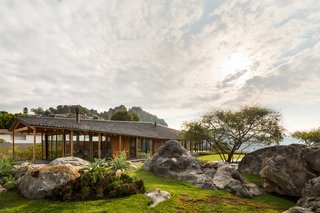
On a hill overlooking Lake Avándaro in Valle de Bravo—a popular weekend retreat about two hours west of Mexico City—lies the low-slung CMV House by Estudio MMX. The terrain around the lake is steep, rocky, and verdant, abounding with water-carved cliffs and boulders. The home’s site, in particular, boasts vast views of the lake and the dramatic mountains that surround it.
Located in the sylvan enclave of Innis Arden about an hour north of Seattle, this home soaks up the natural beauty of the Pacific Northwest. This beautifully maintained midcentury home was designed in 1962 by Seattle–based modernist architect Ralph D. Anderson—who was an early advocate for preservation in the region. A soaring, double-height wall of glass in the living room brings a sense of the home's forested surroundings to its interiors. Character-filled elements of the home's midcentury roots remain—including a slightly sunken living room, a circular staircase, a tongue-and-groove ceiling, wood paneling, and a kitchen countertop crafted of salvaged teak from a 1960s battleship. Updated elements include a renovated kitchen, which kept the original salvaged teak and updated appliances as needed.
The barn makes extraordinarily efficient use of timber milled from on-site trees.
CMV House in the evening.
The upper portion of CMV house is notable for its transparency—glass walls enable you to see right through the house. The roof’s shallow angle and wide eaves make it feel comforting and homey.
The asymmetrical roof has a steep side and a low pitched side.
The architects used smaller bits of oak as wooden shingles for the roof.
Annemariken and Geert sourced old oak trees from their estate to build a barn that provides space for storage, working, and a car port.
Tiny houses are spreading across the world—and probably because it really just makes sense. The tiny home lifestyle is the ultimate application of creative resourcefulness, and allows residents to reduce their environmental footprints without sacrificing good design.
In the L-shaped home, one wing houses the public rooms—living, dining, and kitchen—and the other the bedrooms, with the master on the curved end opposite the living room.
The site’s views face south and the neighbors are to the north, so Edwards Anker positioned the thick, curved walls of the house on the northern side for privacy, while the glass planes capture the setting and ocean breezes. "It’s a very lucky orientation," says Edwards Anker. The house gains its name—Cocoon—from the curved walls.
At first glance, the structure appears to be a single-story home. The surrounding trees create additional privacy as the yard begins to slope toward the rear.
The project name, Summerhouse T (or Sommarhus T in Swedish),  speaks to both the first letter of the client's last name, as well as the T-shape of the home, which was integral to creating indoor/outdoor rooms.
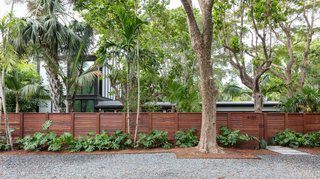
“Most homeowners would tear the whole thing down and start fresh,” says Brillhart. “But it made for a much more interesting project, preserving a little bit of Russell’s legacy and then adding two new wings on each side of the building.” An Ipe fence now lines the front of the property, and the two-story wing can be just glimpsed through the trees on the left.
The uniquely large Elam House is a Usonian Home located in Southern Minnesota and is one of only 13 Wright homes in the state. Built in 1951, the home features five bedrooms, six bathrooms, three floor-to-ceiling fireplaces, two living rooms with soaring ceilings, a cantilevered balcony, over 100 windows, rare white cypress wood and massive limestone piers, and stonework comparable to Wright's home Taliesin East. Guests can book a stay at the one-bedroom guest house on the property and enjoy private tours of the main house.
Van Beek’s extra space is home to her office. She works on a Tense table by Piergiorgio and Michele Cazzaniga and Flow chairs by Jean Marie Massaud, both for MDF Italia.
This bi-level bungalow's building envelope was increased by only 82 square feet, but now showcases an open-plan kitchen-living-dining area and loads of natural light.
16 Kirby Lane North is rooted in midcentury-modern tradition, despite having undergone some recent additions.
The home is a departure from the more traditional, gabled homes in the neighborhood.
A unique curved wall continues inside to contain the service areas of the home including the kitchen cabinets, laundry, and coat closet.
"This project really feels like a gift," says architect Ruud Visser of the completed home.
The low-slung roof helps to integrate the home into its sylvan surroundings.
The home is perched on a hill overlooking Hidden Lake.
The rear view of the home.
The home features a two-car garage with clerestory windows that keep the interior bright.
Full-height sliding glass doors bring a sense of the outdoors into the home.
The exterior of the Mill House.
“Open views, rolling hills, old barns, perch fences, and wildflowers: every aspect of the site was constantly bringing back this historical fiction of rural Quebec at the beginning of the twentieth century,” explain the architects.
The exterior terrace, water channel, deck, and window wall of Matt and Jon Andersen-Miller's renovated midcentury home.
Built for $148,500, Casa Montaña was manufactured in a Madrid factory before being assembled in a mountainous, coastal region in Northwestern Spain.
3767 Barrington Drive features a classic Eichler profile and an inviting bright orange front door.
Mid-century designer Jens Risom's A-framed prefab family retreat, located on the northern portion of Block island, is bordered by a low stone wall, an aesthetic element that appears throughout the land.
With one side of the house closed off, views are directed through the glazed south and west facades to the grassy clearing beyond. "We planted tens of thousands of blue bells and lots of rhododendrons," Oostenbruggen says of the green space. "The setting developed over time."
Subtle features incorporated into the design, including an elevated terrace and jetty, help the home float above the island.
12Next

About

  • About
  • Contact Us
  • FAQ
  • Editorial Standards
  • Careers
  • Advertise
  • Media Kit

Subscriptions

  • Subscribe to Dwell
  • Gift Dwell Magazine
  • Dwell+ Subscription Help
  • Magazine Subscription Help

Professionals

  • Sell Your Products
  • Contribute to Dwell
  • Promote Your Work

Follow

  • @dwellmagazine on Instagram
  • @dwellmagazine on Pinterest
  • @dwell on Facebook
  • @dwell on Twitter
  • @dwell on Flipboard
  • Dwell RSS

© 2026 Recurrent Ventures Inc. All rights reserved.

  • Privacy
  • Terms
  • DMCA
  • Sitemap
  • Do Not Sell or Share My Personal Information