• Home Tours
    • Dwell Exclusives
    • Before & After
    • Budget Breakdown
    • Renovations
    • Prefab
    • Video Tours
    • Travel
    • Real Estate
    • Vacation Rentals
  • Photos
    • Editor’s Picks
    • Bathrooms
    • Kitchens
    • Staircases
    • Outdoor
  • Magazine
    • Current Issue
    • All Issues
  • Shop
    • Shopping Guides
    • Furniture
    • Lighting & Fans
    • Decor & More
    • Kitchen & Dining
    • Bath & Bed
  • Projects
    • Editor’s Picks
    • Modern
    • Midcentury
    • Industrial
    • Farmhouses
    • Scandinavian
    • Find a Pro
    • Sourcebook
  • Collections
    • Editor’s Picks
    • Shopping
    • Recently Saved
    • Planning
SubscribeSign In
  • FILTER

    • All Photos
    • Editor’s Picks
    • exterior
  • Building Type

    • House(12)
    • Apartment
    • Cabin(48)
    • Boathouse
    • Shed(14)
    • Beach House(1)
    • Shipping Container(3)
    • Prefab(24)
    • Farmhouse
    • Mid-Century(1)
    • Ranch
    • Barn
    • Camper(12)
    • Airstream(6)
    • Tent
    • Treehouse(3)
    • Tiny Home(146)
    • Small Home(14)
    • ADU
  • Roof Material

    • Shingles
    • Metal(118)
    • Tile
    • Green(5)
  • Siding Material

    • Wood(46)
    • Concrete(2)
    • Metal(146)
    • Vinyl
    • Stucco(1)
    • Brick(1)
    • Stone
    • Glass(46)
    • Green
  • RoofLine

    • Flat(55)
    • Shed(29)
    • A-Frame(4)
    • Gable(27)
    • Butterfly(3)
    • Hipped
    • Gambrel
    • Mansard
    • Saltbox(4)
    • Curved(11)
    • Dome(2)
    • Sawtooth
All Photos/exterior/siding material : metal/building type : tiny home

Exterior Metal Siding Material Tiny Home Design Photos and Ideas

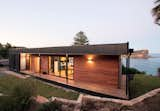
Completed in just six weeks by Australian practice Archiblox, this modest prefab home is perched atop cliffs with prime views of Avalon Beach, just a short drive away from Sydney. Oriented east to west to maximize cross ventilation, the house is clad in marine-grade Colorbond Ultra steel and Queensland blue gum to protect against the elements.
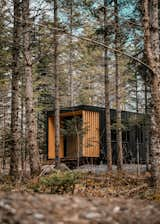
A Go-Box can be transported to different locations easily, making it an ideal alternative for "van life
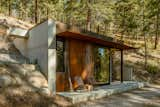
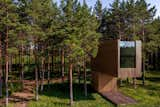
Floor-to-ceiling glazing and a linear skylight help welcome the landscape within the cabin’s small footprint.
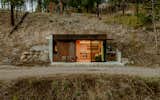
The exterior’s concrete walls pick up on the tones of the rocks that emerge from the surrounding hillside.
The tiny house and eco resort are set on generations-old family land that's remote and completely private so guests are able to unplug immerse themselves in nature.
Madison points out that the pod concept would make it easy to add an extension if necessary. “We see it as a house that can grow with us—and that we can pay for as we go along.”
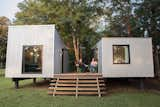
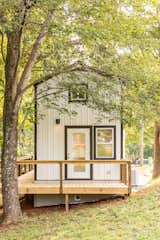
Black-painted window and door frames contrast with the white-painted steel siding and offer a crisp, clean aesthetic for the exterior of the cottage.
After Ashley Trebitowski spotted a Craigslist ad for a 1999 Bluebird school bus being sold in Ennis, Texas, for $4,400, she and her husband, Brandon, hopped on a flight to check out the vehicle and drove it back to their home in New Mexico. Over the next few months, the couple overhauled the bus for their family of five with a $30,000 DIY renovation.
"The composite structure is extraordinarily durable,
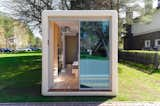
This Beverly Hills kitHAUS is comprised of modernist prefab modules that can accommodate a variety of uses: from yoga studios to home offices, and from weekend retreats to pop-up kiosks and guest rooms.
Made of two 40-foot-long shipping containers that are offset from one another, the Model 6 by IndieDwell offers 640 square feet of living space.
The H4 is HONOMOBO’s most efficient shipping container home. At just over 700 square feet, the home has two bedrooms, a living room, a dining room, a full kitchen, and one bathroom.
With the average tiny home measuring under 500 square feet, these mini abodes often have to be designed radically different from larger traditional houses. We take a look at seven of the biggest lessons one can learn from tiny home design. No matter if you plan to call a tiny house "home" or not, these key tips are relevant to just about any space, large or small.
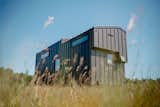
The Jungbauers selected pale blue-gray steel for the exterior siding, a low-maintenance and durable material.
Heather and Kevin Fritz’s first project as Fritz Tiny Homes was a 268-square-foot dwelling sided with standing-seam metal and wood-textured aluminum. "Metal siding assures a maintenance-free exterior regardless of exposure," says Kevin.
The Binkerds raised the skoolie’s ceiling height two feet so it now measures eight feet, which gives the tiny home a feeling of spaciousness.
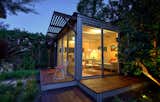
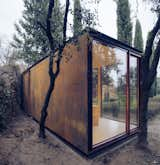
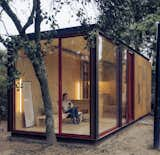
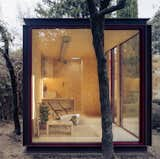
Expansive glass walls were paired with a Corten Steel frame to maximize the yard's garden views.
In the corner, framed, machine-sewn vintage fabrics serve as minimalist wall decor. The artwork is the creation of delavegacanolasso and is available for sale on the firm's website.
The interiors are lined with OSB Poplar wood, and insulated with 12cm of recycled cotton.
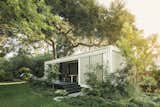
Architects Delavegacanolasso expand a client’s work-from-home office space by adding a Cor-Ten steel prefab to the backyard.
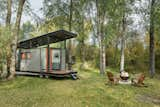
The power for the tiny home–on–wheels comes from a standard RV-style hookup.
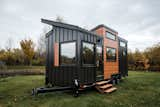
Ala Köl, the most recent design imagined by Tiny House Baluchon for a couple who love to travel, is clad with black aluminum, cedar, and glass.
French builder Baluchon created Ala Köl for their clients’ life on the road.
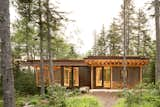
Winkelman Architecture delivers grown-up summer-camp vibes with this unassuming retreat on the coast of Maine.
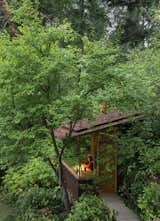
On Bainbridge Island, Jim and Hannah Cutler created a cabin for reading and working. Sited just steps from the main house, it’s a welcoming retreat that the father and daughter share.
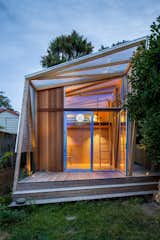
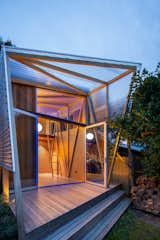
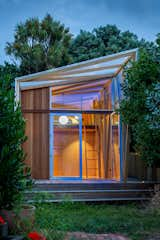
The backyard studio that architect Gerald Parsonson designed to expand a young family’s living space features a polycarbonate pergola and a wraparound deck that connects the hideaway to the garden.
Why Now, More Than Ever, the ADU Is the Future of Home: Whether it serves as an investment, backyard office, or intergenerational housing, the accessory dwelling unit (ADU) has never made more sense.
Casa Parasito effortlessly provides accommodations for two people in a cleverly unique location: the rooftop of a city building in San Juan, Ecuador. El Sindicato Arquitectura wanted to not only provide a home, but also contribute positively to the densification challenge that the city’s inhabitants face. The design concept hinges on an A-frame facade. Within, an interior layout is marked by a rectangular core—also the main social/living space—from which all other utilitarian spaces, such as the kitchen, dining area, bathroom, bed, work area, and storage are accessed.
High in the Colorado mountains, this completely off-grid home cleverly fuses art and functionality. Home to a young couple and their two dogs, the eye-catching dwelling showcases the impeccable craftsmanship and creative flair of its occupants. Greg and Stephanie Parham built San Juan Tiny House to include a wavy roof, an angled front prowl, barn wood siding arranged like the rays of the sun, blue ombré shakes on the rear wall, reclaimed materials throughout, and a collapsible front porch, which features a fold-up deck and fold-down awning. On the inside, clever solutions maximize square feet and storage.
"Some of my favorite elements are the reclaimed Wyoming fence wood siding and cedar tongue and groove ceilings," reveals Mackay. "The use of reclaimed wood is pretty unique."
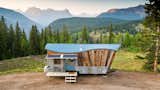
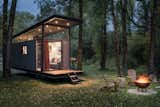
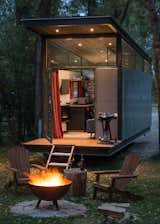
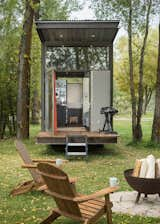
"At Wheelhaus, our priorities are durability, efficient use of space, and sustainability—and we provide all of that along with modern and innovative design," says Mackay. "We focus on energy efficiency, progressive space management, and top-of-the-line building materials."
The outdoor deck seamlessly extends out from the living room, allowing residents to expand the living space outdoors in warmer months. The canopy protects the deck from sun and rain.
Road-Haus can be placed nearly anywhere recreational vehicles or trailers can. "To install Road-Haus, you will need a water line, sewer connection line, and 100 amp service for power within 20 feet of the unit," says Wheelhaus founder Jamie Mackay.
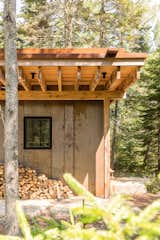
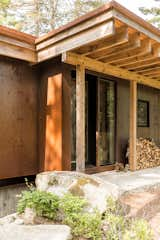
The firm wanted the materiality of the cabin to be "in harmony with the site," says Shaw. "So, that over time, the building could weather gracefully and the site around it would change, and they would do so in tandem."
The materials were kept simple: a foundation of board-formed concrete that reveals the wood grain of the boards used to make it, Cor-Ten steel siding that will develop a characterful patina, and rafters made of hemlock, a local species. "In terms of materials, we wanted the full exterior of the building to be something that would weather gracefully, that required very little maintenance, and that had a long life cycle," says Shaw.
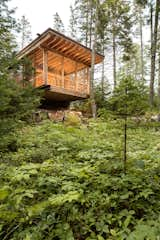
Sited on a rock ledge, the Far Cabin’s screened porch cantilevers over the forest floor for a tree house effect.
The Far Cabin by Winkelman Architecture is set on the forested coast of Maine.
The exterior of Site Shack is covered in steel panels that are bolted to the framing. Look closely and you won’t see any visible fasteners, as Powers Construction’s welder was fastidious, creating a seamless shell with just steel and glass.
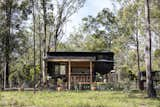
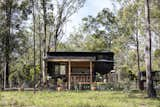
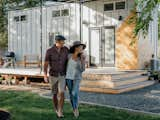
The 304-square-foot house in Queensland, Australia, is clad with steel and cedar—materials that help the home meld with the wooded landscape.
When a family in Queensland, Australia, suffered the loss of a loved one, a tiny home became their ticket to financial freedom.
"The shipping container was placed on a cinder-block crawl space, which contains the furnace, the plumbing, and a tankless hot-water heater," Dianna says.
The Lily Pad is a 280-square-foot shipping container home located near Hocking Hills State Park, Ohio.
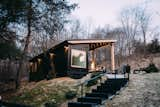
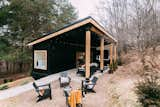
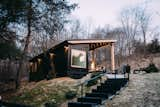
The tiny home is clad with standing-seam metal and cedar. An outdoor kitchen area on the deck provides added living space and ties the home to the natural landscape.
Tony and Charlotte Perez designed and built their own 280-square-foot home, which features an expansive deck off of the front facade.
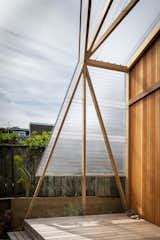
The triangular structural support system continues on the exterior.
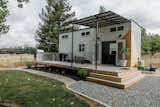
A pergola made of opaque, corrugated polycarbonate extends from the front facade and guards against bright sunlight, wind, and rain.
The backyard studio that architect Gerald Parsonson designed to expand a young family’s living space features a wraparound deck that connects the hideaway to the garden.
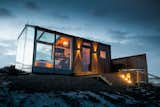
Both ÖÖD Iceland houses have a hot tub at the front overlooking the spectacular scenery. “This makes the experience even more surreal,” says CEO Andreas Tiik.
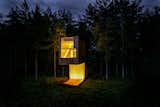
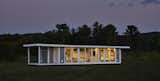
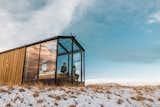
The glass front half of the cabin blurs boundaries between interior and exterior and completely immerses guests in the dramatic surroundings.
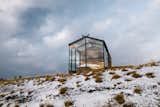
The cabins overlook the Hekla volcano, one of Iceland’s most active volcanoes. It is part of a 25-mile-long volcanic ridge, and during the Middle Ages it was referred to by Europeans as the "Gateway to Hell.”
The two cabins are named Freya and Alva, and feature the runes for “F” and “A” on the exterior timber wall. Signs from Nordic mythology are also found on the back of the houses. “The viking elements and the runes help the cabins fit into Icelandic history,” says CEO Andreas Tiik.
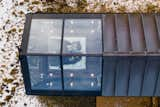
The harsh local climate—including strong winds and acid rain caused by the volcanic landscape—was a particular challenge. The cabin features a copper roof, which is one of the few materials that can cope with acid rain.
The gable decoration is a Viking element traditionally used to protect homes from danger. The “moon” shape comes from the shape of Viking horns.
Two cabins sit in the vast, empty landscape overlooking the Hekla volcano, around three hours’ drive from Reykjavík. The front part of each cabin—for sleeping—is almost entirely glass, while the rear—where the living, kitchen and bathroom spaces are located—is clad in timber for privacy.
ÖÖD offers a range of “mirror houses”—tiny prefab cabins that are often used as guest houses, countryside getaways, and Airbnb accommodations. So far they’ve built projects in 12 different countries, including Estonia, Finland, and Norway. The ÖÖD Iceland home is a bespoke design, based on the clients’ wishes and strict local building requirements. These impacted everything from the dwelling’s structural properties and energy efficiency to the pitched roof.
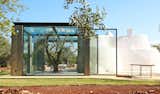
If you’re traveling to Puglia in Italy, one of the most iconic sights are trulli (trullo is the singular), an ancient hut that's specific to the Itria Valley in the Apulia region of Southern Italy. Made with dry stone, trulli date back to medieval times.
123Next
About
  • About
  • Contact Us
  • FAQ
  • Editorial Standards
  • Careers
  • Advertise
  • Media Kit

Subscriptions

  • Subscribe to Dwell
  • Gift Dwell Magazine
  • Dwell+ Subscription Help
  • Magazine Subscription Help

Professionals

  • Sell Your Products
  • Contribute to Dwell
  • Promote Your Work

Follow

  • @dwellmagazine on Instagram
  • @dwellmagazine on Pinterest
  • @dwell on Facebook
  • @dwell on Twitter
  • @dwell on Flipboard
  • Dwell RSS

© 2026 Recurrent Ventures Inc. All rights reserved.

  • Privacy
  • Terms
  • DMCA
  • Sitemap
  • Do Not Sell or Share My Personal Information