Collection by Studio
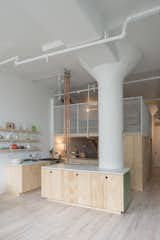
Renovated on a budget of approximately $100 per square foot, this 1,000-square-foot Brooklyn loft in a 1947 chocolate factory is an honest celebration of affordable materials. New Affiliates transformed the formerly dark and cluttered space into a warm, light-filled home that smartly fits two sleeping areas, a bathroom, a study, a new kitchen, and a living/dining area without losing the loft’s airy and open feel. The key to the project’s success was leaving materials and elements exposed—from the pine plywood used for the walls, panels, and cabinets to the existing pair of three-and-a-half-foot-wide Art Moderne columns that were painted white and integrated into the design, rather than hidden.
The firm relocated the bedroom and removed the wall in order to cluster all the living areas together. Black-framed windows emphasize the stunning views.

The loft's original open floor plan, 13-foot-tall ceilings, and polished concrete floors remain. A modern, streamlined kitchen is now a central focal point.
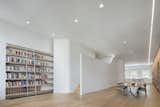
Architect Julian King’s creative approach to incorporating a bedroom without sacrificing natural light: creating a narrow mezzanine with undulating walls that act as both art and a link to the building's past as a silk warehouse.
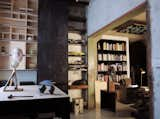
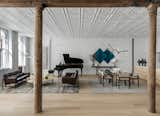
After architect Andrew Berman renovated a 2,800-square-foot, two-bedroom SoHo loft, designer Justin Charette fitted out the interior with minimalist furnishings and built-ins to complement the landmark building’s industrial and historical features—including a pressed tin ceiling and exposed wood beams. Designed as a pied-à-terre for a bicoastal client, the converted loft retains its high ceilings and tall windows that flood the open-plan interior with natural light while introducing a more streamlined aesthetic that includes a neutral palette of white oak, exposed brick walls painted white, and sleek contemporary furnishings—many of which were sourced from local New York designers and makers.