Collection by Trurogirl
Architecture History
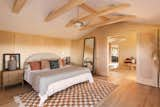
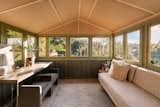
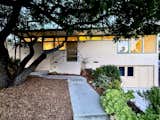
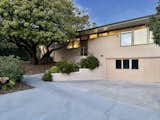
The apartment is one of 10 identical units designed by Gregory Aim in 1947.
The Action Office II by Robert Propst for Herman Miller. This revolutionary design advanced a utopian idea that you could somehow have the ability to shape your space. It was called the “workstation” for the “human performer.”
Roll-Top Desk by George Nelson for Herman Miller

This colorful part of the Action Office II system was one of many aspects that was built to adapt to changes in the workplace.
Roll-Top Desk by George Nelson for Herman Miller This colorful part of the Action Office II system was one of many aspects that was built to adapt to changes in the workplace.
Herman Miller Aeron Chair

Saval says this chair was originally created for residents of nursing homes who spent too much of the day sitting down. “Bill Stumpf, a great designer at Herman Miller, came up with a chair that was way too futuristic for a nursing home, but it ended up being incredibly functional for dot-com workers, who would also be sitting for really long hours.”
Herman Miller Aeron Chair Saval says this chair was originally created for residents of nursing homes who spent too much of the day sitting down. “Bill Stumpf, a great designer at Herman Miller, came up with a chair that was way too futuristic for a nursing home, but it ended up being incredibly functional for dot-com workers, who would also be sitting for really long hours.”
Interior of Connecticut General Office

The design of this office was one of Florence Knoll’s greatest achievements, according to Cubed author Nikil Saval. “It was the peak of a totally organized, thought-through corporate space. It made an insurance company, a paperwork factory, look good, and kept people there.”
Interior of Connecticut General Office The design of this office was one of Florence Knoll’s greatest achievements, according to Cubed author Nikil Saval. “It was the peak of a totally organized, thought-through corporate space. It made an insurance company, a paperwork factory, look good, and kept people there.”
Lucy Chadwick, the founder of Champ Lacombe, Pesce’s longtime gallery, helped spark Pesce’s idea to turn the lamp into a public sculpture, which first appeared in Paris in 2023. It was one of their final projects together before he died in 2024. “Sitting with him in his Broadway studio, a work caught my attention, a small lamp, two hearts pierced, joined, bonded together—the simplest and clearest of gestures,” Chadwick recalls. “I asked on a whim if we could root our upcoming exhibition around this, and from there Double Heart was born. He wanted to access a public dialogue in a permanent and resonating capacity. With this work he has achieved that.”
In groups of five, the architects discussed both the Third Arm Problem and the Ethics Problem. In the latter, a hypothetical architect named Mr. Brown has shown his plan to a client who is poised to accept the design, but on one condition: the client requires a change that conflicts with Mr. Brown's vision. Mr. Brown can't sway the client but wants to keep the project to broaden his reputation, keep his professional contract, and support himself and his staff. The architects wrote down what they would do in Mr. Brown's position, then debated among themselves to reach a consensus. The recordings of these sessions are revealing of personality:
Victor Lundy's mosaic design.
Eero Saarinen stated that his design had
For the Mosaic Construction Test, the architects used one-inch tiles in 22 colors to create a design which,
Researchers simulate the Conformity Test. In this scenario, five subjects in private booths estimate distances after a light indicates the other participants' answers—the supplied answers are fake, however, allowing this test to measure the effect of peer pressure on judgment. While Victor Lundy saw through the deception, others deferred to the false responses.
The initial findings of the study graced the front page of Carnegie Corporation of New York Quarterly in July 1961. The Carnegie Corporation was a source of funding for IPAR.

189 more saves