Collection by Karen Henricks
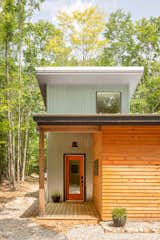
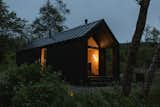
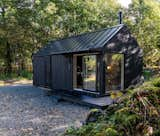
This cabin retreat in the woods of Ontario, Canada has windows that were recycled from a Toronto skyscraper. It is outfitted with self-powered Ecofans, a 65-gallon pressurized tank with a pump that doesn’t require constant power to operate, on-demand propane water heater and refrigerator, and a 19,000 BTU commercial-grade Wolf stove has been converted from natural gas to propane.
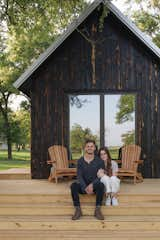
“I envision people writing their books, music, refuelling their creative flow,” says Castillero. He should know about its energizing power more than anyone, really: it brought him back to his love of architecture, after all. “It’s truly my new happy place.”
The bathroom is decked out entirely in a material called Coosa, a plywood alternative that’s becoming popular in the boating and marine construction world. “The material can live underwater,” says Castillero.
Vigo Plumbing provided the matte black plumbing fixtures.
“Certain people don’t feel comfortable camping alone. But in a space like this it feels much safer, and having the amenities — a hot shower, a wood stove, the ability to do some simple cooking — is just perfect," says Castillero.
The Hideout lives on the same five-acre property as another guesthouse Castillero owns, The Woodlands.
Lauren designed a wood storage shelf for the exterior of the cabin, which fits in the open space beneath the bed inside.
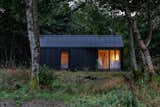
A standing-seam metal roof extends over the porch of their 180-square-foot cabin. In the summer, friends taking advantage of the rafting season are happy to sleep outside.
Floor Plan of Baldie Hill Bunkie by Daymark Design Incorporated
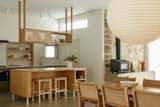
The steel roofing is from Hamilton in Southern Ontario. The doors were reclaimed from a local hotel. The windows are from a Mississauga company. The trim and cabinetry is milled from oak trees that they cut down to build the driveway. “It’s as local as it gets,” says Liz.
The white cedar exterior is rot- and insect-resistant, and has a beautiful silvery finish that will continue to patina over time.
To pick a site for the buildings, Matt used his drone to scan the site and then Daybreak created a 3D model to test out options for placement.
“Barbecue season never ends,” says Liz, explaining how they live with such a small kitchenette. “We even made a cake out there.”
The bunkie features a 1925w solar array, complemented by additional battery storage and a backup generator. This creates more than enough power for the family to live a comfortable modern life, complete with a 40-gallon water heater.
Ariel - Looking East
Liz and Matt had to drill a well to provide water for the property. Wastewater is captured and treated with a gravity-fed septic system that will also serve the main dwelling, when it’s completed.
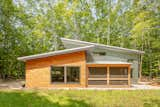
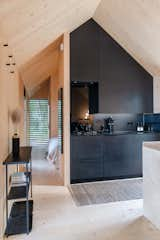
The contemporary, minimalist design is constructed almost entirely out of solid wood.
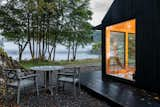
Architect Matt Wittman’s upbringing in rural Washington nurtured a respect for functional buildings that worked with their surroundings: a utilitarian perspective that would inform his Seattle-based studio’s modular home system. “While prefab houses are sometimes divorced from their context, Puzzle Prefab can be modified according to each site,” Wittmann says. “This system has the ability to create spaces that can expand or contract for a variety of environments, whether remote, suburban, or urban.”Architect Matt Wittman’s upbringing in rural Washington nurtured a respect for functional buildings that worked with their surroundings: a utilitarian perspective that would inform his Seattle-based studio’s modular home system. “While prefab houses are sometimes divorced from their context, Puzzle Prefab can be modified according to each site,” Wittmann says. “This system has the ability to create spaces that can expand or contract for a variety of environments, whether remote, suburban, or urban.”Architect and Majamaja cofounder Pekka Littow designed a seaside retreat in Finland to showcase the potential of self-sustaining homes. The first cabin was built in 2020, and there are now four along the archipelago outside Helsinki. Prefabricated elements like vertical wood cladding and crisp gables allow the cabins to be dismounted with minimal impact on the landscape.

39 more saves