
Actually, We’re Not at Peak Advent Calendar Yet
These days, you’d be hard-pressed to walk into a store—or, more realistically, scroll through Instagram—this time of year without being peddled an Advent calendar. The retail trend has been peaking for nearly a decade—in 2018, a BBC article speculated that the "new breed" of Advent calendars for adults, ushered in by beauty brands in the early 2010s, was a rapidly growing bubble that would soon burst. Instead, their numbers have continued to grow, and they are getting more advanced. We’ve long evolved past simple chocolate-behind-cardboard-flap technology—when you buy an Advent calendar now, you can expect an intricately designed package and treats of all kinds.
For the most elaborately packaged calendars, the box has transcended its role as a simple receptacle, becoming a full-blown piece of decor. Take, for instance, the 2026 Advent calendar from beauty brand Flower Knows, which looks like a gingerbread house with hidden compartments, pullout drawers, and a hinged door. Another beauty brand, P. Louise, sold out of their $325 Advent calendar, a carousel with three-dimensional horses, integrated lights, and an independently rotating interior. Neither would look out of place in a playroom. On the more grown-up side of things, there’s also Dior Beauty’s luxury behemoth, a trifold trunk secured with metal clasps that opens to reveal 24 drawers and a lift-top mirror, essentially functioning as a full-size vanity table once all is said and done.
The success of the Advent calendar is inseparable from how well-suited they are for social media, where they’re digested via unboxing videos each holiday season. Many of these videos rack up tens of thousands of views as viewers try to suss out whether the contents of a given Advent calendar are worth the price. Earlier this month, videos about a disappointing $150 Advent calendar from Skims circulated widely, prompting the underwear brand to issue refunds to every customer who purchased one. The contents were so egregiously underwhelming—a few hair ties, some bobby pins—that many have speculated that it was all a ploy to go viral. We wouldn’t put it past the brand, which has a history of trading in controversy.
While Advent calendar packaging morphs into de facto decor, gift-a-day offerings from brands selling actual home goods are still a relatively novel concept, save for offerings from candle companies. The rest of the home decor space remains relatively untapped when it comes to adapting their wares to the format. Some of the few examples include Studio Pieter Stockmans, a Belgian atelier selling 24 days of handcrafted porcelain objects; Villeroy & Boch’s calendar of holiday dishes; and Westwing’s ginormous box holding a mix of home products, including a throw blanket, ornaments, a petite table lamp, and whiskey glasses. Many more home brands sell reusable Advent calendars designed specifically to double as decor: the Porta x Pangea advent calendar has whimsical rows of fabric pockets, while Sage x Clare sells a handcrafted felted wool number.
There is, of course, the issue of scale, and it’s easy to see why home brands would struggle to fit 24 of their products in a single package. But Big Advent Calendar shows no sign of releasing us from its grasp, and if Westwing’s entry into the category is any indication, we will be seeing more experimentation with the format from the home and design world. Where are the candlesticks? The design-y pushpins? The chic linen napkins? When it comes to Advent calendars, shockingly, it seems that we have not yet seen it all.


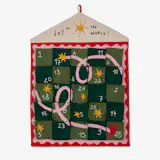
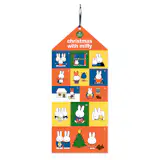
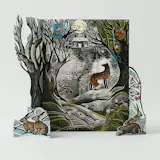


Top illustration by Dwell; images (from left to right) via Porta, Westwing, and Toast
We love the products we feature and hope you do, too. If you buy something through a link on the site, we may earn an affiliate commission.
Recommended Reading:
Published
Topics
Shopping GuidesGet the Shop Newsletter
Smart shopping for the design obsessed. Find what you love in our expertly curated selection of finely crafted home, office, travel, and lifestyle products.