California’s Kitsch Motels Went Viral. Did the Guests Follow?
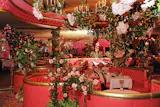
On any given evening at the Madonna Inn in San Luis Obispo, you’re likely to bump into a wonderfully eccentric cast of characters. Old-timers, quick to tell you that they’ve stayed in most of the 110 themed guest rooms, sit elbow-to-elbow at the bar with twentysomethings filming Reels about retro cocktails topped with glacé cherries. In the hotel’s steak house restaurant, content creators snap photos of themselves in the squishy pink leather banquettes, while retirees shuffle across the adjoining dance floor to the swinging sounds of the house band.
Situated halfway between Los Angeles and San Francisco, the Madonna Inn was built in 1958, during the midcentury heyday of the great all-American road trip. Motor lodges began opening along American roadsides in the 1920s and ’30s, but it was during the postwar decades that they really entered their golden age thanks to a rise in leisure time and car ownership among the population, and the expansion of the highway system. At their peak in 1964, around 61,000 motels were operating along the country's highways and byways. California is credited as the birthplace of the motel concept, after the Milestone Mo-Tel Inn swung open its doors to road-weary motorists in 1925 just a few miles from where the Madonna Inn would eventually be located. The Golden State swiftly embraced motor courts with zeal, often incorporating Googie architecture, fantastical themed rooms, and flashy neon signs.
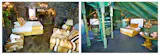
The Madonna Inn has 110 themed guest rooms, among them the Caveman (left) and Just Heaven (right) deluxe suites.
Motel mania cooled from the 1970s onward as chain hotels were rolled out, faster interstates bypassed smaller towns, and the growing accessibility of air travel meant tourists could venture further afield. In the dusty desert outpost of Amboy, California, once a hotspot for Route 66 road trippers, Roy’s Motel & Café shuttered its guest rooms in 1972. The Tropicana in West Hollywood, a former hangout for The Beach Boys, Van Morrison, and Andy Warhol, was demolished in 1987. Rochelle’s Motel in Long Beach, star of many a Technicolor postcard in its heyday, enjoyed a brief second act in the movie Home Alone 2 before the wrecking ball came calling in 1995.
But over the past couple of decades, a revival of America’s vintage motels has taken shape as a growing number of once-forgotten motor lodges have been renovated and reinvented as design-conscious boutique hotels, plenty of them across California and Texas, but also throughout the country from Wyoming to Louisiana to the Northeast. A few years ago, when I reported on the growing influence of social media on California motels, there was considerable optimism that Instagram and influencer visits were bringing a new, digitally savvy crowd to these vintage accommodations. Now, I wanted to revisit that promise and find out whether online enthusiasm was translating into actual bookings.
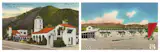
The Milestone Mo-Tel Inn (left), later known as the Motel Inn, opened in San Luis Obispo in 1925 as the world’s first motel. It closed in 1991. Roy’s Motel & Café (right) in Amboy thrived as a Route 66 hotspot from the late 1930s until it shuttered in the 1970s.
Lyndsey Goldwyn, director of marketing at the Madonna Inn, says the hotel has seen "tremendous growth" in its online community, particularly on Instagram, where it has more than 195,000 followers. Much of that visibility comes from the hotel’s own content (an August post celebrating its steak house booth named for Dolly Parton, a frequent visitor, racked up 124,000 likes) and guests posting on their accounts. Lifestyle influencer Kiara Marie recently shared a hotel tour Reel with her 214,000 Instagram followers; singer Sam Smith gushed over the restaurant’s filet mignon and famous pink cake to the 590,000 followers of their food finsta, @samserved. The hotel has also hosted primed-for-social-media events, such as a performance by Dasha, a country-pop singer with more than 938,000 TikTok followers, for a party from Amazon Music and Listerine.
"We are fortunate that many of our paying guests, including everyday visitors, influencers, and celebrities, naturally enjoy sharing their experiences at the Madonna Inn on social media," says Goldwyn. When it comes to working directly with influencers, she says the hotel has " recently become more selective." They still occasionally host influencers when they feel "their content aligns with the Madonna Inn and has the potential to introduce our property to new audiences," but, Goldwyn adds, "influencer partnerships have never been a major focus of our marketing strategy."
Exactly how the Instagrammability of the Madonna Inn’s flamboyant charms—its floral carpets, gilded cherubs circling overhead, and cavernous rooms with cascading rock showers—impacts the number of actual bookings is hard to pin down, Goldwyn says: "The guest booking journey isn’t always straightforward. Someone might discover the Madonna Inn through Instagram, follow our account for several months, and eventually book a stay directly through our website. That makes it difficult to capture the full influence social media has on booking decisions." Perhaps the old advertising rule that a customer needs to see something seven times before making a purchase comes into play.
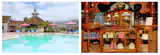
The Madonna Inn also has a pool and spa (left) and a bakery (right), as well as on-site shops, a cocktail lounge, and a steak house.
Someone willing to hazard a guess at the numbers is Mike French, owner of the 19-room Pioneertown Motel near Joshua Tree. "I’d guess roughly twenty percent of bookings come from our socials," he says. "Instagram is our most powerful tool for showing the guest experience, especially for a remote and unique destination like Pioneertown."
Created in 1946 as an Old West film set by a posse of Hollywood cowboys including Roy Rogers and Gene Autry, the themed frontier town the motel takes its name from is today also home to a few hip clothing and craft boutiques, a rustic saloon, a bowling alley, and a barbecue joint and music venue. Pioneertown Motel’s Instagram, which has more than 37,000 followers, isn’t simply used to advertise the property, but also to convey something of the vibe and the wider Pioneertown experience. The desert community still gets the occasional boost from celebrity endorsements: French says that this past summer when actor Jason Momoa played a secret show with his rock band at the local saloon, a recap Reel that the motel’s Instagram was tagged in got almost two million views. "That post alone brought us significant attention and a noticeable lift in bookings," he adds.
When considering if they should host an influencer in return for coverage, it’s not purely a numbers game, French says. "We consider follower count but are much more interested in artists and creatives who will contribute to our story and help build community, so we work with people from all sorts of backgrounds."
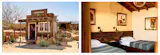
The 19-room Pioneertown Motel was originally built in the 1940s as a film set for old Westerns.
Among those who have carved out a niche as vintage motel influencers are Margaret and Corey Bienert, the creative husband-and-wife duo behind A Pretty Cool Hotel Tour (APCHT). Since launching their social media accounts in 2018, they have clocked up 1.4 million followers on TikTok and 797,000 on Instagram, as well as publishing a glossy coffee table book about fantasy motel suites. (And, as Dwell profiled, even recently opening their own motel-inspired vacation rental.)
Margaret says she’s seen a marked shift in how independent motel owners view social-media exposure. "For the first several years we always paid full price, either because the hotel didn’t see the value or I couldn’t get hold of the right person. In the last couple of years it’s become much easier to work for trade on a hosted stay, or get a media rate in some cases," she says, pointing to the fact that APCHT’s following has grown and motel owners have become more aware of the benefits of online promotion. Today, she says it’s rare to be turned down, but rather than agreeing to a formal sponsored partnership with promotional deliverables, most spots prefer to offer a complimentary stay and see what content emerges. Still, Margaret is conscious not to present a visit from APCHT as the answer to a struggling motel owner’s prayer. "The truth is that even with a large following and frequent viral videos, there’s no guarantee that our posts will greatly increase visits, especially immediately," she says.
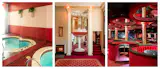
Before Pennsylvania’s Pocono Palace Resort closed in 2024, its famous heart-shaped baths, champagne glass whirlpool tub, and retro-romantic interiors racked up plenty of views on Instagram and TikTok and served as the backdrop for fashion shoots and photo series.
Online adoration alone wasn’t enough to save Pocono Palace Resort in Pennsylvania. Even though the kitschy 1970s honeymoon hotel, with its heart-shaped tubs and champagne-glass baths, had enjoyed something of a virtual renaissance, appearing in multiple APCHT posts (one 2023 TikTok received almost 60,000 likes), British photographer Juno Calypso’s 2016 "The Honeymoon" series, and a 2022 Marc Jacobs Heaven x Mimi Wade collaboration campaign, it ultimately it closed its doors for good in 2024.
Over in Los Alamos in California’s Santa Ynez wine country, the Victorian Mansion has traditionally relied on more old-school word of mouth introductions to its customers, says owner Rod Rigole. "For years we were sold out on weekends without any social media push," Rigole says of the six-room guesthouse, which, though technically not a motel, fits in among the state’s other roadside hotels like the Madonna Inn; its themed suites include a Roman room with a chariot bed and a ’50s guest room where you can sleep in a retrofitted Cadillac convertible. The details that make a stay at the boutique bed and breakfast so unique—such as hand-painted murals, even scented bubble baths tailored to the room’s particular theme—are hard to capture in a square photo. "People really need to hear about it from someone who’s been here," says Rigole. "That said, the internet has a way of finding you. We were fortunate to be featured by a TikTok creator, Marc Sebastian, and his videos passed five million views. It wasn’t something we planned, and it shows that when guests and creators fall for a place, they share it on their own." That experience did prompt the hotel to take a more active approach to social media, Rigole says.
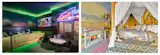
The Victorian Mansion, housed in an 1864 Victorian in the small town of Los Alamos off Highway 101, has six whimsical guest rooms including a 1950s-themed suite (left) and an Egyptian suite (right), plus rooms inspired by ancient Rome and even pirate ships.
At a time when independently owned motels are increasingly endangered—facing a David and Goliath fight against the dominance of hotel chains, guests’ expectations of lightning-fast Wi-Fi and standardized experiences, and the ever-rising costs of maintaining an aging grande dame—every bit of publicity can help keep the lights on. Perhaps there’s a delicate balance to strike. The appeal of these classic motels lies in their old-timey charm and sense of escape from chronically online culture, qualities that could be diluted if internet fame draws too many people to them for their social media palatability. "I have gotten many comments over the years saying, ‘Stop sharing these spots, now they’re going to get popular,’" says Margaret. "My answer is always the same: These spots are niche and will never be mainstream. The truth is, ninety percent of people only want to learn about them; they don’t want to make a habit of visiting," says Margaret.
Ultimately, the promise of Instagram bringing a new generation through the doors of America’s vintage motels seems to have worked, at least in part. Whether that translates into a sustainable business model is another question. But what small-business owner would turn down the prospect of a boost in bookings in exchange for accommodating a few content creators? In the battle to keep these nostalgic roadside landmarks alive, a little internet buzz can go a long way.
Top photo of Alex Madonna’s Gold Rush Steak House courtesy Madonna Inn
Published
Topics
LifestyleGet the Dwell Newsletter
Be the first to see our latest home tours, design news, and more.