• Home Tours
    • Dwell Exclusives
    • Before & After
    • Budget Breakdown
    • Renovations
    • Prefab
    • Video Tours
    • Travel
    • Real Estate
    • Vacation Rentals
  • Photos
    • Editor’s Picks
    • Bathrooms
    • Kitchens
    • Staircases
    • Outdoor
  • Magazine
    • Current Issue
    • All Issues
  • Shop
    • Shopping Guides
    • Furniture
    • Lighting & Fans
    • Decor & More
    • Kitchen & Dining
    • Bath & Bed
  • Projects
    • Editor’s Picks
    • Modern
    • Midcentury
    • Industrial
    • Farmhouses
    • Scandinavian
    • Find a Pro
    • Sourcebook
    • Post a Project
  • Collections
    • Editor’s Picks
    • Shopping
    • Recently Saved
    • Planning
SubscribeSign In
  • FILTER

    • All Photos
    • Editor’s Picks
    • doors
  • Locations

    • Exterior(4)
    • Interior(101)
  • Material

    • Wood(60)
    • Metal(28)
    • Vinyl
    • Masonite
  • Door Type

    • Folding
    • Sliding(5)
    • Swing(101)
All Photos/doors/locations : interior/door type : swing

Doors Interior Swing Door Type Design Photos and Ideas

A bright double height foyer.
A new clean and unified access.
Designers Ezequiel Adelmo Manasseri and María Sol Depetris turned the second floor and attic of a 1906 four-story “French-style” building in Rosario, Argentina, into an apartment that combines historic details with contemporary pieces from their furniture company, Citrino.
The doors are hung with untreated linen curtains. “Fun fact,” says Valérie. “This linen is the same linen great Dutch painters like Rembrandt used.”
The new entryway features a door with circular windows inspired by the curves of the home. Storage for coats and shoes are tucked in the custom cabinetry.
The Carver's home feels as if it's been here for years, thanks to wide-planked, weathered wood floors, layered textures, and collected interiors.
The home's rugged mix of materials brings a warmth to the space, as do the vintage decorative elements, as seen here with the wooden water skis positioned in the background.
In the Pink, a paint color by Sherwin Williams, highlights the pantry door. Everything else is painted Chantilly Lace by Benjamin Moore.
A secret door to the right of the kitchen connects to the garage.
Photo by Kevin Scott
Reclaimed barn boards were used to form the exposed concrete interior walls, which provide thermal mass for significant energy savings. The door with the round window leads to the sauna.
Builder Luis Miranda assembled the CNC-milled parts in 20 days. The clear facade is made of thermally bonded polycarbonate, and the tensile covering is by Desmontables.
The home is located in the suburb of Vredehoek, which means “peaceful corner.” Ironically, the city’s notorious winds can get particularly fierce there. With that in mind, Lumby designed fixed-glass windows framed in sheet metal. Some feature powder-coated steel panels that open for ventilation.
A glimpse into the moody dining room from the hall, which is painted Benjamin Moore Barren Plain. The large artwork is from Sandy Klempner At Home, a local boutique in town. The couple scoured flea markets and vintage stores for the right furniture.
"The paneling was made by recovering the pitch pine beams that we found below the oak floors," says Martin. "We have a very good relationship with Bugada, a wood shop we have worked with for a long time, and we tried a new paneling silhouette that was rejected by an old client of mine." The paneling also absorbs the acoustics in the room and conceals the door to the powder room.
The front entrance's unfinished look was an intentional decision made during construction and explores the concept of "finishing" a home that will certainly continue to evolve.
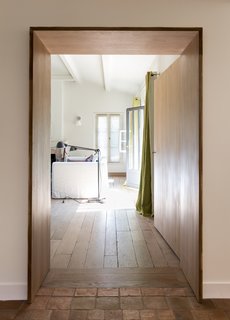
A side door in the music room opens up to an adjacent volume that houses the new, brick-floored guest suite on the ground level.
A wall of windows floods the music room with northern light.
The sunken courtyard at the base of the atrium.
The small alcove above the bathroom is Gonçalves’s favorite design feature. “It allows for overnight stays in unusual yet comfortable conditions,” he says . “This ‘extra room’ has a window, visible in the upper part of the back facade—kids love it!”
In Yuen Long, Hong Kong, a 452-square foot residence is designed to accommodate a young couple, one of their mothers, and their pets: a cat and a parrot. The home features transforming furniture and nooks and crannies that are perfect for the pets. A bench by the door doubles as a litter box.
An interior window conveys natural light into the hallway from an exterior window in the bedroom. Curving walls allow the relatively small space to live larger. The custom door pull is fashioned from walnut.
A new transom window over the doorway brings much-needed light into the hallway, and the doors pocket into the walls for unimpeded flow, which is even more crucial in a small space. "[They] help the flat feel more sleek and less cluttered," says Astrain. The new doors also comply with building regulations—there needed to be a fire door between the kitchen and hallway.
A raised planter adds character and defines the entryway, while still allowing for connection between the front door and living room. “You want the space to breathe, but you also want to designate zones,” says Wei.
Pictured here is the door to the bathroom. White curtains inside the bathroom provide privacy.
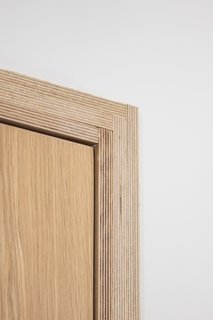
Special attention was paid to the casework detail. Overlapping butt joints form a subtle herringbone pattern and exposes the plywood end-grain.
The door leads to an en-suite room that can be used for sleeping or set up as a dining room, as it is here.
Martins | Afonso described the project as one where “everything was conceived in detail so that each architectural element finds its way, and where each sequencing and framing both highlights what previously existed and also gives it the stamp of united togetherness.”
The entrance sequence begins with a metal staircase that leads up to the first-floor entrance hall with a coat cupboard and bathroom.
Saddle Peak Residence by AUX Architecture
The foyer is lined with square coral imitation concrete tile. The door to the left of the entrance leads to the bathroom.
"The privacy in the different areas of the house is handled by the opacity of the glass that encloses the in-between spaces. Most are transparent, but some are translucent or opaque, depending on the need for privacy," note the architects.
"The attic bathroom was non-existent," explains Claude. "We created an attic shed dormer out the back of the house and added a tile shower, floor, and beautiful restroom/vanity area." The designers also added a large closet to the attic.
The doors are birdhouse-shaped to match the pets theme.
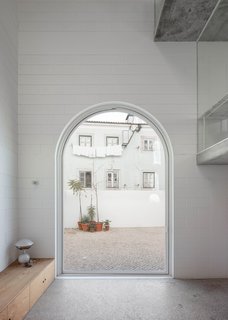
Fitted with glass, a massive arched pivot door, made by Much More than a Window, provides access to the outdoor patio.
The "ceiling" of the courtyard is composed of a panel of gridded metal, which draws sunlight down from the upper levels.
The vaulted doors lead out to a courtyard.
Albareda fitted the large vaulted openings in the basement with glass doors.
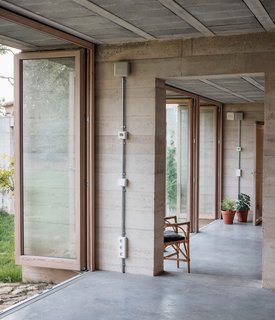
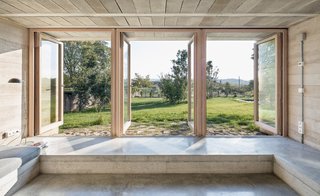
Doors in every room open up entirely to the garden.
Built-in furnishings create a clean, minimalist layout.
The entry sequence starts with a humble and compressed space that expands upon entry. The front door is made of repurposed wood.
Large overhangs block the harsh summer sun while allowing the low winter sun to infiltrate the living spaces.
An iron-and-glass bedroom wall allows natural light to fill the kitchen and entryway.
Detail of main entry door with custom terrazzo and brass door handle
On the first floor, the office powder room is hidden behind a door disguised as a bookshelf.
The Hidden Light Collection designed by Joan Lao Design studio for Fambuena.
Triangles are a central theme in this peaceful, light-filled home. The geometric shape is reflected in a tastefully placed pendant lamp.
Dash Marshall custom designed the handrail for the stairs.
The living room of Apartment B9 by Ema Butrimaviciute
On the ground floor, the two designers collaborated with London–based studio Custhom to create a handprinted, floral wallpaper.
The entrance hallway.
Some parts of the house have more thermal mass, and stay cooler in summer, while others with less thermal mass require heating in winter.
12Next

About

  • About
  • Contact Us
  • FAQ
  • Editorial Standards
  • Careers
  • Advertise
  • Media Kit

Subscriptions

  • Subscribe to Dwell
  • Gift Dwell Magazine
  • Dwell+ Subscription Help
  • Magazine Subscription Help

Professionals

  • Post a Project
  • Sell Your Products
  • Contribute to Dwell
  • Promote Your Work

Follow

  • @dwellmagazine on Instagram
  • @dwellmagazine on Pinterest
  • @dwell on Facebook
  • @dwell on Twitter
  • @dwell on Flipboard
  • Dwell RSS

© 2025 Recurrent Ventures Inc. All rights reserved.

  • Privacy
  • Terms
  • DMCA
  • Sitemap
  • Do Not Sell or Share My Personal Information