Tickets selling fast! Join us for Dwell Open House Los Angeles on Saturday, October 17
Collection by Zach Edelson

Renovations That Salvage Construction Materials From Old Homes
British writer Stewart Brand famously said each part of a building has a lifespan: its decays, degrades, or becomes unnecessary. He advocated designs that were simple and easy to modify; residents and architects could easily replace elements as they decayed or turned useless. Similarly, we can lessen our environmental impact by salvaging and re-using healthy materials from buildings that have failed.
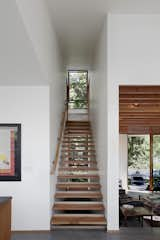
The architects divided the home into separate floors for sleeping, living, and working. Since the house is situated on a hill that slopes 20 feet from top to bottom, there are plenty of stairs. Those pictured above were crafted using wood salvaged from a 100-year-old bungalow that previously stood on the site.
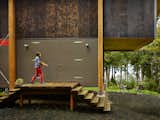
The house features materials, cabinetry, and plants salvaged from homes slated to be demolished. Hoover and her friends completed much of that work on their own. "The process of reclaiming these plants and items and giving them a new life and home is fulfilling on many levels," Hoover says. "Easier on the pocketbook and the environment—and you receive the benefit of a good workout." The facade is clad in T1-11 plywood, which Hoover charred herself using a weed dragon torch. She painted the HardiePanel, too.
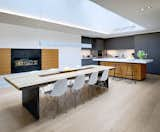
The kitchen also displays a reliance on natural materials and soft colors. For the wine storage area, Roundabout Studio used reclaimed wood from the original building. The new dining room table also utilizes repurposed studs salvaged from the building’s demolition. The kitchen stools are from Avenue Road, the dining room table is custom, and the pendant light is from Dark Tools.
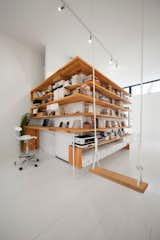
The renovated attic is oriented around a central volume that houses the bathroom. The wooden shelves were fashioned from hemlock planks that were salvaged during the demolition of the roof structure.
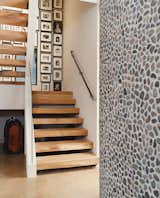
The metal used for the railing and wood for the stair treads in the hall were saved from destruction and reused.