Tickets selling fast! Join us for Dwell Open House Los Angeles on Saturday, October 17
Collection by Michelle Kohler
Favorites
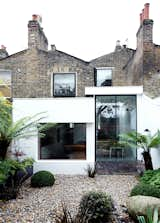
The rear of the house features Victorian brick, a modern extension, and Velfac windows. Landscape designer Matthew Wright was inspired by the art of Henri Rousseau when choosing plants to set amid the garden’s Dorset pebbles.
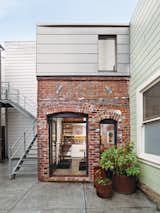
Home Renovation Tip: Get an Understanding of What’s Already Around
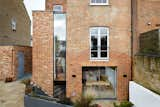
A tall and narrow window separates the new brickwork from the historic building, making its lines and profile clearly understandable.

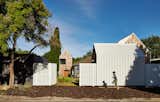
A small country road borders the property to the west.
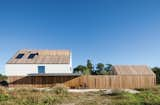
With its vertical wood slats, the garden fence helps unify the main house and the smaller shed.
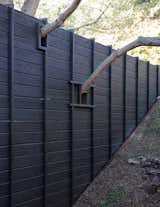
During construction, Mariscal’s team adjusted the design to accommodate the boughs of an old pine tree in the backyard. The unique detail imbues the home with a spirit of wabi-sabi—or beauty through imperfection.
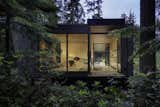
The prefab design utilizes a pin foundation system that reduces the project’s carbon footprint by 77 percent, says Wittman.
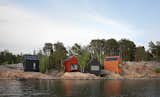
Architect Matt Wittman’s upbringing in rural Washington nurtured a respect for functional buildings that worked with their surroundings: a utilitarian perspective that would inform his Seattle-based studio’s modular home system. “While prefab houses are sometimes divorced from their context, Puzzle Prefab can be modified according to each site,” Wittmann says. “This system has the ability to create spaces that can expand or contract for a variety of environments, whether remote, suburban, or urban.”Architect Matt Wittman’s upbringing in rural Washington nurtured a respect for functional buildings that worked with their surroundings: a utilitarian perspective that would inform his Seattle-based studio’s modular home system. “While prefab houses are sometimes divorced from their context, Puzzle Prefab can be modified according to each site,” Wittmann says. “This system has the ability to create spaces that can expand or contract for a variety of environments, whether remote, suburban, or urban.”Architect and Majamaja cofounder Pekka Littow designed a seaside retreat in Finland to showcase the potential of self-sustaining homes. The first cabin was built in 2020, and there are now four along the archipelago outside Helsinki. Prefabricated elements like vertical wood cladding and crisp gables allow the cabins to be dismounted with minimal impact on the landscape.
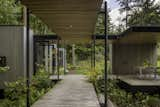
The pilot home on Whidbey Island demonstrates the system’s potential: a 600-square-foot interior paired with nearly equal covered outdoor space, set lightly on a pin foundation that protects tree roots and cuts carbon by 77 percent. "Puzzle Prefab can be modified according to each site,

The home was first owed by Cesare Santini—an Italian sculptor and plaster artisan—as a live-work space.

The second floor—which houses a study, three bedrooms, and a bathroom—hangs over the first floor like a plus sign. This arrangement creates four wells around the living, dining, and kitchen areas on the first floor. Three of these double-height spaces feature skylights clad with mirrors to introduce direct and reflected light inside throughout the day.


16th-century stone inlays on the kitchen floor.


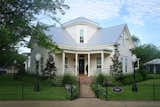
Magnolia House by Chip and Joanna Gaines

103 more saves