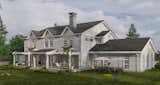
Why a Prefab Builder Is Making Houses With “Original Tradwife” Martha Stewart
In the late 1980s, Kmart introduced a Martha Stewart-branded home goods line to their customers. The move was shocking to many: As bonafide homekeeping royalty, whose magazine and television show brought her into millions of American living rooms, Stewart’s brand had always maintained a high-end shine. After all, her tips appeared tailored to the wealthy. Hosting an Easter brunch for 20, spending afternoons in the garden, making homemade seating cards for Thanksgiving dinner—these were tasks seemingly fit for a stay-at-home mom with plentiful disposable income. Bringing a line of goods—bed sheets and towels, dinnerware, furnishings, paints, and much more—to the average family seemed counter to the storybook vision for the lifestyle Stewart was selling. But, as Stewart said in the 2025 Netflix documentary, Martha, the move to Kmart meant bringing beautiful things to everyone.
Today, even though Kmart no longer is in business, Stewart is still marketing an accessible vision for the whole home to the market—literally. Last week, prefab homebuilder Hapi Homes launched a new line of Martha Stewart-branded single-family homes and accessory dwelling units modeled after Stewart’s four famed personal houses: Her Bedford County Farmhouse in Katonah, New York; her former penthouse residence on Perry Street in Manhattan; her masonry estate in Maine; and, her coastal East Hampton house. At price points between $125,000 and $460,000, prospective homeowners can purchase and build a new house that has Stewart’s stamp of approval. In a moment when homeownership itself has become a luxury, could she provide a new opportunity to bring something beautiful to the masses?

The Marquee Brands x Hapi Homes for Martha Stewart Iconic Estate Housing Collection features takes on several of her properties, past and present, including a house based off of Stewart’s one-time New York City apartment.
The Hapi-Martha prefab home follows a similar principle driving the original Kmartification of curated living: the ability to buy the template for a lifestyle. Hapi Homes, which uses a panelized light-gauge steel structure delivered on site, was created three years ago to rapidly build housing using a similar ethos—their prefab process, Hapi CEO Mary O’Brien tells Dwell, can deliver nearly 40 percent of a whole house to the site, reducing labor costs and construction waste, while ultimately being fully customizable. Their early ventures involved building out a technology platform that will allow clients to select a home design, configure it, and see pricing in real time, but they quickly saw an opportunity to partner with existing, well-known brands to bring their product to the market.
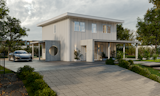
There’s also a smaller, ADU version of the structure.
Stay up to Date on the Latest in Prefab Homes
From cozy cottages to large family houses, see how prefab continues to redefine the future of construction, building, and design.
"When we started seeking out different brands in the market, obviously Martha Stewart was the number one in terms of brand equity for home authority, design, and more," says O’Brien. Stewart’s houses, "beautiful, architecturally designed homes," as O’Brien describes them, serve as inspiration for the Hapi designs, rather than being exact replicas. Stewart’s Perry Street home, a condo designed by Richard Meier, has been rendered into a modern single-family house clad in white; Hapi pays homage to the floor-to-ceiling windows on the first floor, where large fenestrations cover much of the facade.

Skylands, named after Stewart’s Maine property, echoes that building’s masonry facade.
Working with Stewart and her team over several months, "we’ve tried to basically recreate some of the features as a primary family home," says O’Brien, "to stay as true as possible to the original aesthetics, but obviously applying those to modern architecture and modern technologies." They’re also rescaling each of the four homes to include an ADU-sized version; all models can be tailored to budget or site constraints.
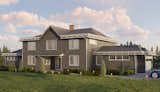
Lily Pond uses the cedar shingles popular in the coastal Hamptons.
In the homemaking world, what happens inside the home is just as important. O’Brien says that they’ve crafted one standard floor plan across the four houses, each tailored specifically by Stewart’s feedback. They’ve worked through more than 20 floor plans, she says, to find the right fit. Small details like what the kitchen cabinets should look like, how garage storage should work, window placements, and adding pocket doors were all considered by Stewart’s team. ("They wouldn’t accept anything other than what Martha would have in her house," says O’Brien.) It was rigorous, but according to O’Brien, "There’s a lot more potential livability and usability from a space perspective that people will also get from the Martha Stewart sensibility."
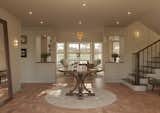
The interiors of the design for the home based off her current house in Bedford County skew traditional, and emphasize light.
Even after 40 years of styling homes, Stewart’s brand has maintained a relevancy that is perhaps due to this sensibility—her keen eye for living that is attainable at many price points and appealing to diverse audiences. Martha stans range from her early adopters in the ’80s who turned into her show every week to younger consumers who watch her TikToks. In some ways the brand partnership is refreshing: The claim that prefabrication will somehow solve the housing crisis is questionable, at best. Tapping into a brand with broad appeal and a trusted aesthetic—guaranteed by Stewart’s high standards—could instead provide proof of concept for prefabrication itself as a method to make homes accessible once again. Kmart made Martha Stewart less about the highbrow and more about everyday people; when it comes to her branded housing, likewise, we can count on such a partnership to not cheapen the final product. After all, some of America’s most beloved homes were once purchased from a Sears catalog at a price point meant for working families.
Top rendering of the Bedford courtesy of Hapi Homes.
Related Reading:
Published
Stay up to Date on the Latest in Prefab Homes
From cozy cottages to large family houses, see how prefab continues to redefine the future of construction, building, and design.