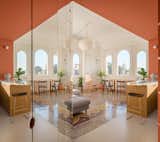
Kyle Schuneman on Masculine Design
I recently talked over the phone with Kyle Schuneman, interior and set designer of Live Well Designs in Los Angeles. In the course of our conversation he again and again argued for men taking a greater role in the design and decoration of their living spaces.

With this notion of masculine spaces in mind, I put a few questions to him to see just how he imagines a male space, how it might differ from a female space, and how the much ballyhooed "woman’s touch" might very well benefit from a few male fingerprints from time to time. Here’s what Schuneman had to say:
How would you define a masculine space? It's not just the spare bedroom with the oversized flat screen?
A masculine space is a room of rich textures and deep colors. It marries clean lines and a functional approach with a hint of quirk that comes from the unashamed addition of personal and sometimes foreign objects to an otherwise pulled together room. A masculine space is very different than a space "decorated" by a dude. It’s a style just like any other and it takes effort. For the last century men have been alienated from design, leaving it as a woman’s domain. In a lot of ways it is an unexplored venture.
How do you design a masculine space? Is it a question of materials, forms, light?
Masculine spaces are achieved through layering. This doesn’t mean clutter, as a masculine space is usually very classically laid out and streamlined, but rather the texture is a place to do something interesting. Whether it’s a leather bed or a wood root side table or a more playful item like the hint of a camo print on a pillow, masculine spaces need to feel rich. Layering the old with the new like using an old locker room bench as a coffee table with a classic Eames seating group give a wink and a nod to the past and always create conversation starters. Neutral colors for walls like taupes and grays are also reminiscent of a factory or a loft, which are both considered very iconic masculine environments.

Do you think that men and women approach interior design differently?
Yes, and a very face value answer to this would be that men equal function and women equal form. But through my experience I have found that there is something much deeper in their motivations, which is that men have a need to claim their space. Yes, men want their place to function right, but they want it to be known as "theirs" with no apologies. I have found that women have a much more collaborative agenda when it comes to interior design. They consult magazines, friends, and television shows to get ideas and pull from each to design their space. It reflects much more of the trends of the time while men, being less interested in experimenting with new themes, hold on to the classics of design.
You mentioned that many men aren't terribly present in the design and furnishing of their homes, which is perhaps why we get these unsophisticated, hyper-masculine "man caves" hanging on the periphery of lacy, frilly homes. How do you empower men to take a greater part in the design of their houses?
The "Man Cave" is as much a psychological move as it is a physical space. It's a rebellion against the rest of the home because the man is often estranged from the décor that fills the other rooms. It is his way of claiming his territory and representing himself. Good design is always collaborative and both sides need to be willing to have some give and take. Women need to open up to the man’s ideas and men need to take a valid interest. I always say that if someone wants blue and the other wants red, purple is not the solution as no one ends up being happy. It is about the yin and yang that make a good collaborative room and men need to realize that their taste is a very valid balance to the woman’s point of view.

For someone with a strong modernist aesthetic already, clean lines and honest materials might be de rigeur. How then do you create a modern masculine space that's not some over-the-top Bond villain lair?
It is always about mixing in textures. Soft textures and rounded edges as accents aren’t dichotomous with masculine design. Adding a rug in a natural fiber like jute or a chunky wool in a solid color will only add to the modern and masculine aesthetic and still warm up the space to feel welcome. Another way of softening edges is through plants. Succulents are a great way to add softness while still keeping a manly edge and what is great about plants is they give the man something to take care of and take pride in. When you interact with your space you become much more intertwined with it and it builds a positive cycle.

Many men truly cherish having their own spaces, but how would you advise those who want to see their aesthetic run throughout their homes, not just play out in the basement or den?
I think any good design has a balance of both aspects so going into a discussion about a room or a house with that in mind should definitely give the man some latitude to express his ideas. Suggesting that he really wants leather as the upholstery fabric will give him a voice in the room while still letting the woman decide on the style of the sofa or vice versa. I think many men like their own space because they are so misrepresented in the rest of the house. But if their ideas were incorporated throughout they would be much less likely to retreat to just one comfortable spot.
What's your stance on neon beer signs?
Tough one. If it's old enough to be considered retro it could be cool in small doses. However, many people confuse commercial design with residential design and this would be a classic case of that. It is a similar offense to arranging your bookcase like you would a store inventory.
TIPS
A palette of material: I love incorporating old metals, new woods, and innovative fabrics when putting together the palette for a masculine space. I think a great, unexpected idea is to use men's suiting fabrics to upholster a sofa or chair. It is a classic design and the fabric is ultra soft while giving a wink and a nod to male design.
Three pitfalls to avoid in designing a masculine space: Just like in female design, going overboard can end up disastrous. If you put so many antlers up on the wall it just becomes overkill instead of an interesting and whimsical addition to a minimalist room. Using only one texture, like all wood furniture or all leather leads to a room going from masculine to drab. It pulls the look of the room down by making it seem all out of a showroom instead of collected overtime. Finally, I would say letting your beloved collection take over. If you have so many matchbooks in jars everywhere it can go from being a cool conversation starter to an eerie element in the villain’s home of a horror movie.
A few modern pieces: The bachelor pad has almost become an iconic character in pop culture but by getting rid of the bearskin rugs and rubber sheets you can really create a sophisticated and masculine space with the addition of these:
The Philippe Chair by Jonathan Adler
Aluminum Antler Lamp Base by Roost
Flocks Pouf by Christien Meindertsma for Design Within Reach
French Industrial Locker Room Bench from Wisteria
Mod Lodge Sideboard by Iannone
Mason Glass Top Desk by Williams Sonoma Home
-
Philippe Chair
This club chair, new from Jonathan Adler, is a two-tone creation atop blackened iron legs. Available in leather and linen, as seen here, or upholstered in a single fabric.- Designed by: Jonathan Adler
- Price: $1,495
Advertising
Advertising
Advertising
Related Products
-
Animal Blueprints
As previously mentioned, I came across a…
Latest
-
02.05
The Scandic Grand Central, Stockholm
Greetings from Sweden! I'm traveling in Stockholm to cover the…
-
02.06
Bedrock Images's Forgotten Maps
For the architecturally inclined—especially those with a…
-
02.04
Street Furniture Your City Wishes it Had
Street furniture already catches the eye of denizens eyeing a…
Follow
Dwell
-
Inga Sempe's new #lightingdesign for Wastberg http://t.co/oN1G0jTa
-
Each issue look out for the Take Me Home giveaway. Enter now to win the @gusmodern Timber Table from March http://t.co/9rSrie9X! #design
-
Form Us With Friends opening #design http://t.co/qeHXIRzb
-
Form Us With Friends pendants for #Design House Stockholm http://t.co/QwG8iRIW


If straight men are afraid of design, it's because of exactly these sorts of normative ideas about gender. You should recommend your fine magazine to Mr. Schuneman, who will find quickly that men with wives are regularly interested and invested in their homes. Men are still (unfortunately) responsible for a wide majority of both buildings and designs of furniture, and the iconic interior-decorator personality is almost always a gay man. It's true that women dominate the marketplace for domestic products, and that for many people the home is "a woman's domain." But these people don't read Dwell and aren't likely interested in (and can't likely afford) anything from Jonathan Adler. If Dwell is a modern magazine, ask yourself how a modernist would think about intentionally (simplistic) gendered design. The premise of this article feels quaint and too-cute; argue for a man to take a bigger role in the design of his home, but don't hold up the tired stereotypes that have kept him out so far.
I agree completely. Coming at interior design from this point of view is archaic; it starts from long-debunked stereotypes instead of beginning with a more modern family in mind. Though the design tips seem well thought out, they don't seem to be singularly correlated to a "masculine" design as opposed to any other.
In my experience, it's not that women always overrun men's sense of decor/design in a home, it's more often that so many men aren't willing to put in the time and energy to make it anything at all - the research, the shopping, the finding, the slow changes and integration over time. This also seems to be along gender lines - a woman is perhaps more often thinking about her home, about how she wants it to be perceived and used by others, inside and outside of her household (and the stereotype of the grandmotherly protected furniture and decorative fussiness seems a bit out of fashion with women I know, too). In my experience, so many men are less likely to really think about their home as a communal space - it's either no thought at all with a few want items here and there (high-end electronics, some enormous sofa, something "modern" here or there) or it's uber-designed and streamlined and tasteful to the point of lacking in comfort or personality. Just my experience, though stereotypes are never universal.
I think your description of a masculine design is quite stereotypical. Camo print...locker room bench...factory colors, really? All of that may be a part of a man's life but what you express through the design of a room could be a bit more sophisticated. I don't mean to get all angry feminist but I don't see any problem with design being a woman's domain since most professional fields are dominated by men anyways.
As a gay couple we have always thought creating our space was maybe easier for us than for our straight couple friends. It seemed for many that the woman had the say of the house and the husband didn't know anything about it. The man was excluded. But after reading the article and thinking about couples we know, I think it comes down to two things. One, if you have a sense of design you will create that modern, thoughtful, sensible, with a quirky touch. And two, if you are a couple who shares this sensibility, your space will reflect it. If you don't understand and care about design, then you fall back on finding the trendy new look and most often that will be decorating and "frilly." My husband and I share a similar design sesibility and that is why our space works, not because it has a double dose of male influence.
You should always chase your dreams
I love Kyle Schuneman's style.
Excellent piece. Glad to see there's a pro out there in favor of antlers and beer signs. Within reason, clearly.
Very interesting article, hope you don't mind me putting it in my blog. Please check out http://swellchief.wordpress.com. Let me know your comments as I need your help on some articles about men's design. Thanks
I agree with the texture and color statements. I am a bachelor who loves women and some of what they shop for. On my likes for my living space, I can say that women who love me often appreciate my space. One even lived in it with me. Equality for the masculine eye, only if he wants to design his home with personal statements. Otherwise, he can delegate the job to his mate.
I tend to agree more with the idea that masculinity in design has more to do with function and cleaner lines as opposed to color and texture.
What's wrong with a bond villain lair.
Thank goodness someone is taking up this issue. We recognize everywhere the need to hear women's voices to redress age-old issues of gender, but men's voices are being shouted down in the meantime. It's good to be a man, and it's good for a man to express his masculinity, just as it's good for a woman to express femininity. To Thea's "I don't see any problem with design being a woman's domain since most professional fields are dominated by men anyways" I'd turn it around and ask if the statement "I don't see any problem with men being in the executive office since most secretarial pools are dominated by women anyways" is equally acceptable.
Cut to the chase. My esperience is that women want one thing from decor: The house is her "nest", which of course will be dominated by whatever taste and style she prefers.
Kyle Schuneman has got some great ideas. The problem is that in my house my wife wants to put her stamp on things and ignores all my ideas.
I was impressed with Kyle's ability to express the differences. My husband enjoys having a say in all facets of deorating "our" home. I am glad that I didn't take the job on without his input. Because I listened to his wants and needs in the rooms the house feels like a comfortable home to both of us. Thanks for the good work Kyly.
RSS Feed
Add a Comment