Dwell

At Home in the Modern World

Conversation »

Bjarke Ingels of BIG

As his firm’s name implies, Bjarke Ingles thinks big. At 34 years old, the founder of BIG, the Bjarke Ingels Group, has broken into Denmark’s architectural scene, which has historically been a tightly closed-off old boys’ club, and shattered the conventional molds of building typologies. He’s an architect, yes, but that’s not a word he frequently uses. He describes his role as a “midwife of this continuous rebirth of the city rather than the actual creator” and an “alchemist” who combines seemingly incongruous ideas to create architectural gold. Dwell’s Miyoko Ohtake sat down with Ingels in his Copenhagen studio to find out how this aspiring cartoonist has become one of today’s most innovative designers.

  • Published on: 07/23/2009
ingeles bjarke portrait big

You’ve gained fame—and hefty commissions—at quite a young age. Did you always want to be an architect?

The true story is that I was aiming at becoming a graphic novelist and creating graphic novels and comic books. There isn’t a graphic-novelist academy or comic-book-designer school in Copenhagen, but there is a school of architecture at the Royal Danish Academy of Fine Arts. After high school I thought that I could apply there and then at least I’d get some drawing lessons and maybe could switch tracks. It was a way of getting started but then all of a sudden I got into architecture. The only architect I knew of when I started studying was Jørn Utzon. There’s no architecture in my family so it was very virgin territory.

When did you realize that you really liked architecture?

I started getting into it slowly during my first year in 1993, but the year I went to Barcelona was the tipping point. That was from 1996 to 1997. I had become infatuated with this one Catalan architect and went to study under him at the Polytechnic University of Catalonia in Barcelona. I had imagined that things there would be more rigorous and less arbitrary than they were. I just started hanging out with some of my fellow students, skipping class, and going to the library a lot. We went through everything in the library during my first three years there, and it was like a series of love affairs with different architects as we found them. I discovered Rem Koolhaas during this time.

I went with another group of students on a study trip to Holland. We went around and learned a lot of stuff there and then, together with a group of friends, we entered a competition for the extension of the Copenhagen University. We were selected for the second phase of the competition and received $100,000 to do that second stage. We all dropped out of school, got an office space in Barcelona, and hired engineers and some of our fellow students to help us with the project. We played “serious grown-up architects” until we lost the second stage. Then I went back to school and to work for OMA in Holland.

seattlecentrallibraryoma.jp

What was it like to work with Koolhaas?

I worked with Koolhaas for half a year in 1998, then graduated from the Royal Danish Academy in 1999, and returned to Holland again for the rest of 1999 and 2000. I worked most of the time on the first phases of the Seattle Central Library.

The office was a really intense experience to be in this incredibly international environment. I think Koolhaas himself was essentially the only Dutch person on the team. It was quite interesting, this meeting point of so many different cultures and so many people with different backgrounds. I, of course, had my very clear idea of what interested me in the place and their work.

What was it that drew you so much to Koolhaas?

At the point when I discovered Koolhaas, I had become disappointed in most of the architects I had pursued passionately and found that at some point, most architectural practices became essentially a one-style practice based on a certain set of assumptions that this is better than that. But once you question those assumptions, everything sort of falls apart. In Koolhaas's work and the way we pursued projects in the office was that each one was its own experiment.

Architecture is the pursuit of the consequences of a certain set of ideas and is not some autonomous art form or entity. It is the physical manifestation of all other forces of society that are constantly in development. It is the material expression of society changing, life changing. When they change, you need to figure out how to do things differently, how to change the framework, how to accommodate this new way of living. The architect is like a midwife of this continuous rebirth of the city rather than the actual creator. We help society express itself. I think that the idea of architecture as a product of contemporary culture and society is much more interesting rather architecture as some sort of aesthetic absolute.

How did PLOT, the firm you founded in Copenhagen in 2001 with Julien De Smedt, come to be?

Me and Julien had gotten this idea. We were pretty fascinated with this new economy and the idea where in architecture, especially in Denmark, it was the rule that you had to be 50 before you got anything built. But we would always read about these backroom geeks who wrote the script for some kind of web browser and became overnight billionaires. We had both gotten the idea of making film in the same way that you make a building. When you make architecture, you don’t cut the mountain out of a block of marble, you put together a lot of existing systems. It’s about how you put things together, how you curate all the different things from the catalogue together in a new way that makes it original.

I’d come across this quote by David Lynch where a journalist asks him about Lost Highway, the scene where the house bursts into fire, if that was from some kind of old gangster movie. He said that after a hundred years of cinema, everything has been shot, that you cannot shoot anything that hasn’t already been shot. So we thought, “What if you could actually make a real movie by curating existing material?” You would choose Jack Nicholson as your main character and you would simply find all the footage of Jack Nicholson and see if by editing and curating the clips if you could create a real feature film with its own plot. We started the film and submitted two applications for funding.

While we were waiting for the responses for the cinema funding, we started submitting architecture competition entries too. After six months, we go a no from the cinema grant foundations but won first prize for three of the competitions we had entered. At that point we got completely swamped with architecture and simply forgot about the movie.

So that was your big break?

The first big break was when we won the three competitions in a row. There had been nothing going on in the Danish architecture scene for a really long time. It was an established myth that it was impossible to change things and impossible to start an office. I think at that time there were six big offices in Denmark, three of them in Copenhagen. They were dominating the scene and everyone knew you couldn’t do it on your own. But then we won those three competitions and a local architecture magazine devoted an issue on our office because it was the first time a new and different set of ideas had been established.

The second break was when we completed the VM House. It’s one thing to be able to communicate ideas in an attractive and understandable format but architecture critics will always say, “Yeah, looks nice, sounds great, but can they build?”. The VM House was built really cheaply and sold out really quickly even though it was a completely different breed of apartment. That was real credibility—and gaining credibility is a major element in allowing you to do what you want to do.

bigmountaindwellingexterior.jp

What is it that you really want to do?

The literary genre I prefer is science fiction. I just finished reading Michel Houellebecq’s The Possibility of an Island. It’s like a diary of a 24th generation of this neo-human breed looking back at the event that happened around our time that led to the creation of this new human race. Philip K. Dick, who wrote Do Androids Dream of Electric Sheep?, which was the inspiration for Blade Runner, made this definition for science fiction: Science fiction is not necessarily a space opera or something that takes place in the future; Science fiction is a story where the plot is driven by an innovation—a cultural innovation, a technological innovation, a political innovation, a social innovation—the entire story is about the pursuit, the philosophical exploration, of the consequences of this changed factor.

In a way, this is what we try to do in architecture. Whenever we start a project, we try to see if there’s anything that’s changed since the last time we did a project or is there anything we can do differently from the way we always do it. Once we find that factor, the entire architecture becomes an exploration of that idea. Rather than coming up with all kinds of shapes and forms or having to crank something out, it’s more a matter of discovery.

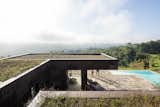
The Mountain Dwelling is a pretty good example. It’s the idea that you combine the suburban lifestyle—a house with a garden—with an urban Danish context. You put something that is normally kept separate, like a parking building and a residential building, and combine them so it transforms all the apartments into penthouses. Once we put those forces into play, the actual architecture was almost just a consequence. It became quite easy. There are always a lot of problems you have to solve, but in a way, it’s like you just discover the architecture. So here, instead of having to choose between a house with a garden and a house in an urban location, you can have both.

How are you combining other seemingly incongruous elements in other new projects?

The Mountain was our first example of what I call “architectural alchemy,” this idea that by mixing traditional ingredients like normal flats and a normal parking structure, when you combine them, they become gold. That idea was taken to the next level with a project we’re working on called the Big House or the Figure Eight, where we mixed the office components and rowhouse components to create a hybrid.

One of the more popular neighborhoods in Copenhagen is called Potato Row; The homes there are all two-story brownstone townhouses with gardens in front. They’re low but extremely dense and have this incredible social life surrounding them. We took the idea that the public realm is normally restricted to the ground floor and everything above it is private space. We thought that because this is in a new neighborhood of Copenhagen in Ørestad, it’d be sick to provide a new kind of housing project.

The result is a figure-eight shape with a mix of rowhouses and office and retail space that lets the public space invade the vertical dimension all the way up to the penthouses. Offices like daylight but they hate sunshine so on the south and west sides we pushed them to the ground floor but on the north we lifted them up to the fourth story. The figure-eight path lets you walk and bicycle along the rowhouse gardens all the way to the 10th-floor penthouse so you get this intimate, spontaneous social interaction on all levels. It’s just like a public street. The elevators were designed so the mailman can fit his bicycle into the elevator to go to the top of the building and then he can move with gravity as he delivers mail to each residence. So instead of having the public life being restricted to the ground floor, here, the social interaction of neighbors extends vertically all the way to the roofscape.

In Denmark, much of the discussion around architecture and urban planning centers on social sustainability and creating these vibrant places of social interaction. How do you do that in a place like Ørestad, which is this strange, new, developing area with no existing urban elements or human scale except the metro stop?

When you building in the middle of a city, you can do the most boring, hideous apartment building but it’s still going to be pretty nice because you can still go down and buy a croissant in a café. But when you build where there’s absolutely nothing you can’t expect too much from your surroundings. You essentially have to create as much quality in your immediate vicinity as you possibly can so there’s a possibility that what you do becomes a place. Then you hope your neighbors do the same thing.

We try to maximize the social qualities of different projects. We also ask ourselves why you would ever want to move there. Maybe we could provide something that wasn’t available anywhere else. With the VM Houses [in Ørestad], it’s that the flats are all duplexes or three-plexes and you can get a three-dimensional apartment that would be impossible to find in Copenhagen. With the Mountain [also in Ørestad], it’s that each unit is a penthouse with a private garden. With the Big house, it’s the idea of having the Potato Rows in an urban block.

The VM Houses was one of your last projects as PLOT, the firm you founded with Julien De Smedt. You’ve since disbanded, and since 2006 you’ve headed up BIG, the Bjarke Ingels Group, and he has led JDS Architects. What cause the split?

We had been together for five years and felt like trying something new. It happened pretty spontaneously and all ended merrily. It was like how cell division is a natural consequence of organic growth. I think Julien and his team are doing great stuff.

bjarkepeoplesbuildingblog.jp

The BIG office is now filled 60 employees and rows and rows of models. What other projects are on the horizon?

Yeah, we have this onslaught of models for every project. We always have things mounted on the walls and lots of models, the good and bad, ugly and beautiful. You toss those ideas around and try to attack the different ideas. You generate new stuff. The more you can materialize the creative process, the less it’s in your head, the more it’s out in the open, and the more it’s available for those eureka moments.

Right now, we’re working on a project in Shanghai called the People’s Building. It started as a project for a competition for a hotel with a spa, swimming pool, and conference center on the waterfront of a river in northern Sweden. We devised a scheme of a traditional hotel that splits into two at the bottom with one part becoming the conference center and the other becoming the pool and spa. It created this gate in the middle that allowed the street to move through the building and down to the river. It was pretty simple and had a really interesting shape, but when we submitted it, we knew that this probably didn’t look like something from the north of Sweden; it probably looked like something from China and we completely lost the competition.

The project was kind of forgotten about until we had a meeting with a businessman from the Guangxi province in China who was looking for a collaboration with a Scandinavian office. He saw the project and said, “Wow, that’s the Chinese character for the word ‘people.’” It’s also the first character in the People’s Republic of China so we thought that was kind of interesting.

We hired a feng shui master and traveled to China to scale it up three times to China’s proportions. We proposed it for the Expo 2010 Shanghai more or less at the same time the organizing committee decided not to do high rises on the site. The Chinese developer found a much better site closer to the Pudong district of Shanghai. Our interpreter there actually told us that drawing a horizontal line through the vertical line of the “people” character made it the character for “big.”

Is that why you have that character on the door and use it as your office’s logo?

Exactly. It felt like karma when they told us about the character for “big.” We really liked it.

bjarkeeschertowerbig.jp

And the Escher drawings on the wall?

We’re big fans of Escher, who is Danish. We have a project for a white tower that we’re planning for here in Copenhagen that we call the Escher Tower. It’s three square towers that merge into one at the bottom and merge into one at the top but the top is perpendicular to the bottom. With Escher, it looks like it works graphically, but it’s impossible to do in reality. With this building, it’s the opposite.

When a building gets taller than a certain height, it becomes a skyscraper and the primary structural concern becomes the wind load. Most skyscrapers are square so that when the wind blows, the building has a good foothold. Scandinavian skyscrapers are very thin buildings where you have a lot of daylight and fresh air and not a lot of deep space. They look simple but become very complicated because they do not have much foothold and you get an unstable monolith.

We attacked that to get the Escher Tower. The central tower is completely straight and the two other towers wrap around the central one so that where you have the biggest wind load you have the biggest foothold and where you have almost no foothold, you have almost no wind load. This is what we try to do with our work, go beyond the boring box.

bjarkehbblog.j

Another project you’re doing is the Danish pavilion for the Expo 2010 Shanghai.

We thought about what the concept of the Expo is: “Better City, Better Life” as is focused on sustainability. We thought about how there will be 220 countries and it might end up being this orgy of environmental technology and maybe we should try to find a specific angle: What could Denmark possibly offer China? We made a comparison between the two countries. Obviously China is one of the biggest countries in the world and Denmark is one of the smallest. China has a communist economy; Denmark is a social democratic welfare state. The national symbol of China is the Chinese dragon; In Denmark we have the swan.

We found a lot of cliché things but also, China has a lot of great poets but interestingly enough, in the basic curriculum of the Chinese public schools that over a billion children have gone through, there are three stories by Danish author Hans Christian Andersen, who even has a Chinese name that means teacher of peace and compassion. The biggest tourist attraction in China is the Great Wall; in Denmark, it’s the Little Mermaid statue in honor of Hans Christian Andersen.

Obviously there is this completely different scale and quality life but there are many similarities. Shanghai is a port city; Copenhagen is a port city. And there are funny things like that the most famous contemporary work by a Danish architect is Jørn Utzon’s Scandinavian reinterpretation of a Chinese pagoda.

Then we finally got the idea that if you look back, China has been going through this incredibly explosive development. Twenty or 30 years ago there were only two kinds of cars in Shanghai; everybody else was going around on bicycles and everyone has this image from the past of Chinese people on bicycles. But now, even in some places in Shanghai, the bicycle has become forbidden and the car has become the status symbol.

In the same period of time, it’s been the reverse in Copenhagen. The bicycle has become a status symbol and the symbol of a healthy lifestyle and healthy city. One third of Copenhagen’s population use a bicycle for community and one of every three trips is taken by bicycle. We’ve even developed new breeds of bicycles: bicycles to put your children in, bicycles for your groceries, and even 1,500 bikes parked around the city that you can use for free. You put in a 20-kroner coin [approximately 3.80 USD] and get it back when you return the bike.

So we thought that maybe we could introduce—or reintroduce—the bike to Shanghai as a gift. Instead of talking about the city bikes, people can try them in Shanghai. We proposed giving them 1,500 city bikes that work the same way as they do in Copenhagen. Then we considered the entire pavilion as the infrastructure for bicycles. The entire roof would be the parking for the bikes. You would go into the Danish pavilion, get your bike, and then go on your bike to all the other pavilions.

Copenhagen is also a port city and again, instead of talking about its port, that the water has become so clean that you actually swim in it, or the Harbor Bath we did, we proposed sailing to Shanghai with a tank full of Danish harbor water and making a harbor bath in the middle of the pavilion. People could actually borrow a pair of red-and-white swim shorts or a swimsuit and jump in and really feel and taste how clean that water is. We also image a pile of rocks in the middle with the actual Little Mermaid statue sitting on it. In her absence, we’d invite prominent Chinese artists to reinterpret her in statues that would be placed where she usually sits. It’s going to be pretty cool.

To see more of the Mountain Dwellings project in Copenhagen, Denmark, check out our extended slideshow of images from the September 2009 issue.

Advertising
Advertising
Subscribe Today

Don't Miss a Word of Dwell

$19.95 10 Issues / a Year

Dwell Cover