Net Assets
Argentinean materials, a roiling economy, and a pinch of personal tumult served as the recipe for furniture designer Alejandro Sticotti’s Buenos Aires oasis.
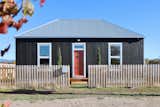
Gesturing at the wood-and-iron house he designed for his family three years ago, the Buenos Aires–based furniture designer and architect Alejandro Sticotti declares, “It was like putting in a UFO, like something from Mars.” True, with its clean lines, open floor plan, and raw finishes it stands in stark contrast to its decidedly more traditional neighbors in this tranquil Buenos Aires suburb of Olivos—mostly hundred-year-old English Tudor-style houses with terra-cotta tile roofs and warrens of small, dark rooms. But unlike the derivative surrounding buildings, Sticotti’s house actually feels Argentinean, as if it blossomed out of its gardenlike plot, a genuine native species. It practically did. When Sticotti and his wife, Mercedes Hernaez, a graphic designer, began looking for a house in this neighborhood 20 minutes north of downtown Buenos Aires, they couldn’t imagine living in a typical residence’s cramped quarters. He was a devoted modernist, addicted to “natural materials, clean spaces, less is more” in both his furniture and building designs. And she had previously lived in an airy colonial-style apartment in the chic Palermo neighborhood. But one site did catch their eye: the 5,400-square-foot garden outside one of the houses they were considering. Exhilarated by the idea of finally designing their own home, and delighted by its location next to a tree-filled town plaza, Sticotti and Hernaez made an offer for the land and it was accepted.
Sticotti had designed about a dozen houses for friends and clients over the past two decades—he studied architecture at the University of Buenos Aires before establishing his own line of furniture, NET—so building his own wasn’t much of a stretch. “To him, it was like creating a grand meuble,” says Hernaez—a big piece of furniture. He custom-designed every detail and had 14 employees in his furniture workshop and architecture studio fabricate them, from the gigantic, Mondrianesque installations of double-paned windows and doors (made of locally forged iron and rare peteriby wood from northern Argentina) to the modular lapacho-and-pine shelving units used throughout the house to hold books and CDs. Design Within Reach was so impressed that they picked up the shelves for distribution in the United States.
The house peeks out from a scrim of greenery.
The house held symbolic value for the couple: It was a physical rebuilding of their lives after a series of turbulent events. First there was the emotional turmoil of their relationship—when they met back in 1995, they were both married to other people, each with two children of their own. And then there was the devastating economic crisis of 2001, during which Argentines’ bank accounts were frozen and devalued, making investing in anything, including a home, extremely challenging. Previously abundant construction materials from abroad were suddenly scarce and extremely expensive, forcing designers to look inward for inspiration and recycled materials—a new concept for the country, though not for Sticotti, who has always liked working with old wood. Because of this necessary resourcefulness (and a foreign market suddenly interested in Argentina’s newly affordable goods), the early 2000s were a particularly vibrant and creative moment for Argentinean design, says Sticotti.
Reflecting that economic and architectural climate, as well as Sticotti’s own aesthetic leanings, the finished house is very much “of Argentina,” as he says. “People always say that Buenos Aires is like a European city [because of the baroque architecture and Italian heritage], but at the same time, we have our own culture, our own materials. This house is all B.A. In a way, I was trying to find something that represents us—and what we’ve got here is leather and wood and concrete.”
Those three materials make many appearances, in several incarnations, throughout the house. The exterior is clad with strips of Latin American lapacho hardwood, affixed an inch from the building to provide good insulation and air circulation; like teak, it will weather and gray over time. The second and third stories—dedicated to the children’s bedrooms and the master bedroom, respectively—have floors of recycled pine, recovered from a local demolition site. (The couple’s children live with them part-time and range in age between 11 and 18.) The walls are paneled in full sheets of plywood, to minimize scrap and keep costs down. Slats salvaged from an old house in La Boca—a Buenos Aires neighborhood known both for its rainbow-colored wooden houses and as the birthplace of tango—lend visual interest to walls in the living room and mas-ter bedroom and are affixed backwards to hide their brightly painted faces.
In a nod to traditional Argentinean construction techniques, the ceilings and central structural wall are poured-in-place concrete, with seams and cracks showing “for honesty,” says Sticotti. “I try to use simple, honest materials. I don’t like paint or plaster; I prefer to leave things as they come, and show how things are made.” Furniture from Sticotti’s own line provides most of the house’s decorative flourishes. Mixed in with a scattering of design icons—wire Bertoia chairs and a pair of cowhide-covered butterfly chairs, invented in 1939 by three Buenos Aires designers—are a plethora of NET products: router-cut cedar light shades; wooden stools topped with woven rawhide; tray-topped side tables (used as nightstands in the bedrooms and as a coffee table in front of the couch); and those modular shelving units, lined with books along a narrow catwalk hovering above the double-height living room.
In the kitchen, buffed concrete floors, chrome globe lights, and a fleet of Bertoia chairs comprise a sleek backdrop for quirkier pieces like the marble-topped wooden tables from a Catholic school, snagged at a local flea market. The secret to the spare, uncluttered shelves? A dispensa, or walk-in pantry, down the hall. “We hide everything we don’t want to see,” Sticotti explains. “We don’t want to have to look at brands.”
“A house floating in the garden” is how Sticotti describes the finished building. Every room overlooks the surrounding landscape, with treetop and park views from the upstairs bedrooms and a tangle of flowering plants, cacti, and jacaranda trees visible from the ground-floor living area. Floor-to-ceiling glass doors slide open onto large patios, physically extending the interior living space into the garden, and a stacked stone fireplace literally penetrates the glass wall in the living room—a bit of visual trickery that blurs the line between the end of the house and the beginning of the yard. Upstairs, a giant deck off the master bedroom overflows with terra-cotta pots whose contents tell the story of the couple’s past and present lives: plants and cacti from their previous apartments and gardens; other people’s discarded plants, snagged off downtown sidewalks; and blooming souvenirs from their travels.
These days, the house buzzes with activity, alive with the sound of teenagers playing musical instruments, a tinny radio in the kitchen, and two dogs lumbering underfoot. Seated contentedly on the deep, nestlike sofa (a Sticotti original, of course), Hernaez sighs happily. She’s a recent convert to modern design and she’s not looking back. “This is more fresh, more light, not much in the background. It’s like a paradise!” she says.
It’s also a brave new direction for Buenos Aires, a city best known for its ornate European-style baroque buildings. Sticotti’s house, born out of trying economic and personal times, and set amidst a sea of terra-cotta roofs and faux English cottages, signals a very 21st-century approach to Argentine architecture, one that melds local and recycled materials with a global modernist language and
celebrates native architects and designers who thrive by that old gardener’s motto: Bloom where you’re planted.
Advertising
Advertising
Advertising
Related Products
-
Silver Mesh Office Drawer Organizer
Like the Viola organizers—and NFL running back…
-
Walker Mesh Bags
Hands down the most durable of trapper-keepers…
-
Buenos Aires Placemat
by Jonathan AdlerBecause a few dinnertime spills are…
Latest
-
02.08
Fair Chairs
We continue our coverage of the 2012 Stockholm Furniture and…
-
02.07
Seven from Stockholm Design Week
It's about mid-way through the 2012 Stockholm Design Week and…
-
02.07
Hotel Fasano Boa Vista, Brazil
Just a few months ago, Fasano Hotels opened a sprawling…
Follow
Dwell
-
Our overage of the Stockholm Design Week continues with a look at a few especially haute seats: http://t.co/AI8RmEdw #furnituredesign
-
Big news involving @HWKN_arch @marchitizer @MoMAPS1 and new pal Pedro Gadanho: http://t.co/5Hv55IlF #architecture
-
RT @Sight_Unseen & @coolhunting: Flash sale site for eBay & Craigslist @BureauofTrade culls rare web finds http://t.co/Z86Hlnf4 #shopping
-
We love the new Isay Weinfeld-designed hotel in Sao Paolo: nat'l setting & great #design & vintage finds inside http://t.co/fIQJCCZg #travel


to me, this house is so warm and inviting, even though some of the materials are typically associated with a bit more of a cold, industrial feel. this feels very rooted in its surroundings; the quote "grow where you are planted" seems impossibly appropriate. the home is peacefully, safely nestled among the landscape....perhaps protected from the prevalent tudor styles surrounding it. thank you for sharing!
1st All those windows must be highly efficient which made me think, why don't cars have dual pane type windows etc. We would use less A/C and heat and get better mpg assumably. If it's good for a house why not a car? 2nd I'm not uber modern, but can someone tell me why all modern homes here seem to have wood "paneling" for lack of a better term? So much wood just turns me off, I like colors white will do if nothing else.
This is one of my favorite homes that you've profiled recently. I agree w/ the first poster completely. Thanks for the the higher quality photos.
RE: Joejeep: Automobiles cannot use certain types of materials because they would significantly increase the weight of the car. Dual pane windows would certainly be heavier, and because they form the "greenhouse" of the vehicle it would raise the cars center of gravity and make it more prone to rollover as well.
This is really a beautiful home that I've enjoyed looking at more than once. This couple is almost like the Eames' in the Southern Hemisphere with the design of not only their own home but also furniture as well. The use of wood on the vertical walls I think is particularly beautiful. I'd love to see more of their furniture available here in the United States & not just the bookshelves. Does this architect have a website or link to his furniture? All in all very inspiring-thank you.
RE: Chris, thanks I guess that makes sense, what about the obsession with so many modern homes in Dwell with the all wood "panel" look, can anyone explain that? I really liked the Casa Study house, it wasn't all brown woody-looking. Does anyone know what I mean? Like I said, I'm not uber modern but my taste has been leaning more and more modern to my wife's shagrin. I'm just trying to understand the "woody" look.
Joe, I think that there are a couple of reasons that you see soooooo much wood in the new modern look. 1. Many of the materials used in modern construction have a "cold" stigma to them (Concrete, Steel, Glass, etc.). Wood brings those other items together and give a "warmer" feel to the area. 2. Wood finishes tend to be much higher end than using painted drywall.......and these homes are all very high end. 3. At least for me, the return of the warm wood is a welcome retro aspect. It reminds me of many of the mid century modern homes.....and breaks away from the mass white painted mdf trim and orange peel drywall. That being said, I just built a modern home with MDF and Drywall....because I couldn't afford the wood treatment.....
Chris: There are a number of high-end vehicles that do use double glazings. It is used more to control the acoustics rather than the energy.
ale,what it really feels good about the house ,that have many inspirations on the case study houses and the idea of modern is in every part of it , is that most of the paneling are reclaimed wood that of course have their memories , i say modern , minimal , can be warm . ale
To me, the wood in this house nicely offsets the coolness of the large expanses of glass and the exposed concrete. The bedroom seems especially warm and inviting, because of the balanced use of wood, cement and glass. I do love trees and wood, personally but it can feel kind of funky, "wooly" or dated, in some contexts. I don't feel that way about these rooms. I presume the wood is recycled and it probably mutes the sounds in an otherwise boomy, or echo-prone design of cement and glass.
Thanks for the info, the wood look just doesn't seem warmer to me and to my eye looks low end, I'd rather see flat sleek walls rather than the 70s ish wood all over. The case study house of Jeremy Levine's is more to my taste. As they say though, to each his own. They are all wonderful homes.
anyone know what the black lamps are on either side of the master bed?
This is one of my favorite homes profiled by dwell. A wonderful mix of old and new, cold and warm, etc.
RSS Feed
Add a Comment